


Imagine dipping your toes into one of the most revolutionary biotechnologies ever. A dream experiment that promises to be transformational! If you’re planning a CRISPR experiment you’re probably excited but also a little nervous that you have all the essentials packed. Don’t worry we got you covered! Here are our recommendations for everything you’ll need on your CRISPR adventure.
Must Haves
A Clear Experimental Goal: Science experiments are full of surprises but it’s still important to start your CRISPR experiment knowing what you want. Before you even start packing make sure you know what kind of edits you’ll be making. Do you want to cause a permanent loss of gene expression and/or function (i.e. a knockout experiment)? Generate a specific and new mutant allele of a gene? Increase or decrease expression of a target gene? The more specific you are the easier it will be to choose the rest of your reagents.
Bioethical Considerations: These are essential when planning a CRISPR experiment. Including them will ensure that the research is conducted safely, ethically, and in a manner that considers the potential consequences both for humans and the environment.

Cas nuclease: If there was a “must must must have” part of the list this enzyme would go on it. Cas nucleases are highly specific and programmable molecular scissors that cut DNA. They’re essential to CRISPR experiments. There are also a lot of them to choose from! The timeless and still hard-to-beat classic in Cas9 (kind of like the little black dress of the CRISPR world). But also check out some of the other Cas enzyme options out there. https://blog.addgene.org/crispr-101-cas9-vs.-the-other-cass
Guide RNA: Weather you’re exploring a foreign country or carrying out a CRISPR experiment a good guide makes all the difference. For a CRISPR experiment, you want something carefully curated to meet your individual requirements. We suggest a 20 RNA spacer that targets your specific DNA region of interest connected to a more general RNA scaffold that can help lug around the Cas enzyme and help with binding. But don’t worry, making your own guide is easy. Check out this website for further tips and resources.
Expression System: You’ll need a way to express both the Cas enzymes and gRNAs in your target cells. Like a lot of items on this list, you’ll have several great options to choose from. Maybe you’ll opt to pack the gRNA/Cas sequences into viral particles and then introduce these particles into the target cells. Maybe you’ll transcribe in vitro Cas mRNA and your gRNA and then introduce them into your cells by electroporation or microinjection. The “best” choice depends on you and your target so we’re not making a single recommendation. However, we do recommend that you view discovering the ‘best’ expression system as part of your adventure!
DNA Sequence: Don’t get stranded on your CRISPR experimental adventure without a target DNA sequence to cut and modify. It’s very basic – you need a location in a genome where you want to introduce a change and that your CRISPR system can recognize and cut. But don’t let that simplicity mislead you into underestimating the importance (and time) it will take to pick out the right sequence. And definitely don’t go CRISRP experimenting without your target DNA mixed in.
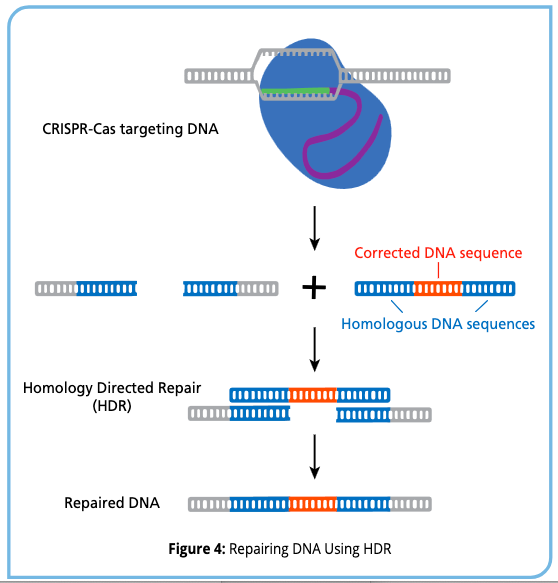
Repair Template: [This only applies to experiments involving homology direct repair (HDR). If you’ve opted for a non-homologous end joining (NHEJ) CRISPR experiment, then you can skip this last item.] In HDR CRISPR experiments, a repair template is a synthetic DNA molecule that is designed to serve as a template for the repair of a double-stranded break in the target DNA. The repair template contains a desired sequence that is intended to be inserted into the target DNA at the site of the break. Take time designing this sequence as it will guide the entire repair process.
Nice to Have
Genome Sequences of Your Target Organism: Gone are the days when gene editing was restricted to just model organisms. However, data about your organism’s (or cell line’s) genome is still tremendously helpful. If you have multiple whole-genome sequences, it can help you create guide RNAs that are more specific and less likely to produce off-target effects. Additionally, this information can help you choose the best Cas enzyme for the job. Understanding the genetic diversity within your species can also help predict potential off-target effects. Having genetic knowledge about your target gene can aid in designing a repair template and even in deciding on the type of CRISPR experiment and expression/delivery system to use.
GFP: CRISPR-based editing works well in the vast majority of cells but there are always exceptions. Some cell types appear to exhibit low or no Cas activity even when the Cas enzyme is expressed at high levels. If you suspect you might be experiencing the latter it’s always useful to have some fluorescence at hand! A fluorescent assay with GFP can help you estimate CRISPR activity in your cells or even help determine repair outcomes.
Base Editors: Base editors are not for everyone or every experiment, but they do have their place. Base editors do what their names suggest, they modify nucleotide bases. For example, cytosine base editors (CBEs) change a C to a T (or a G to an A strand on the opposite strand) and adenine base editors (ABEs) change an A to a G (or a T to a C on the opposite strand.) These editors can be attached to inactivated Cas enzymes and then integrated into a CRISPR experiment to allow for highly targeted base changes. If your HDR reaction isn’t going well a base editor may be a viable alternative.
Skip
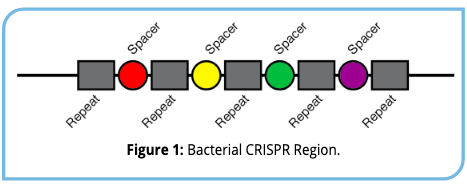
CRISPR: Yes it sounds crazy to skip the CRISPR in a CRISPR experiment. But CRISPR – Clustered Regularly Interspaced Short Palindromic Repeats – can be left at home! That’s because these are repetitive DNA sequences consisting of palindromic repeats and spacer sequences that are found in organisms like bacteria and archaea and used to protect these microorganisms from viruses. (After a virus invades a microorganism and assuming the microorganism survives, the microorganism cuts up the virus’ genetic material. At this triumphant time, it also pastes parts of the viral DNA into CRISPR sites to serve as genetic memories. Then if the virus attacks again the bacteria can convert the saved DNA into RNA molecules which enable Cas enzymes to quickly target and destroy the invaders.) CRISPR is an amazingly adaptive and effective part of microorganism immune systems but isn’t needed for CRISPR experiments.
Intrigued by CRISPR and curious to see it in action? With our CRISPR experiment kit, you can experience firsthand how this revolutionary technology works. Perfect for classrooms and hands-on learners, our kit includes all the essential reagents and materials to explore the cutting edge of genetic science in a guided, educational setting. Ready to dive in? Learn more here!
 The Official Blog of Edvotek®
1 comment
Comments are closed.