


‘Tis the season! As the holidays approach, families gather, traditions and cultures are celebrated, and delicious dishes abound. Yet, in the classroom, this festive period often means a unique blend of end-of-semester burnout colliding with holiday exuberance, making the final days a challenge.
Have you ever wondered about the biology behind all the festive feelings this time of year? Are you searching for a way to teach your students even on the day before break?
Whatever your holiday and whatever your reason read on to discover about the “Christmas Spirit” neural network discovered by a team of scientists using functional MRI technologies and published here in BMJ. We’ll briefly discuss the technology, the findings, and how to use this primary paper in your classroom this month.
Functional Magnetic Resource Imaging (fMRI)
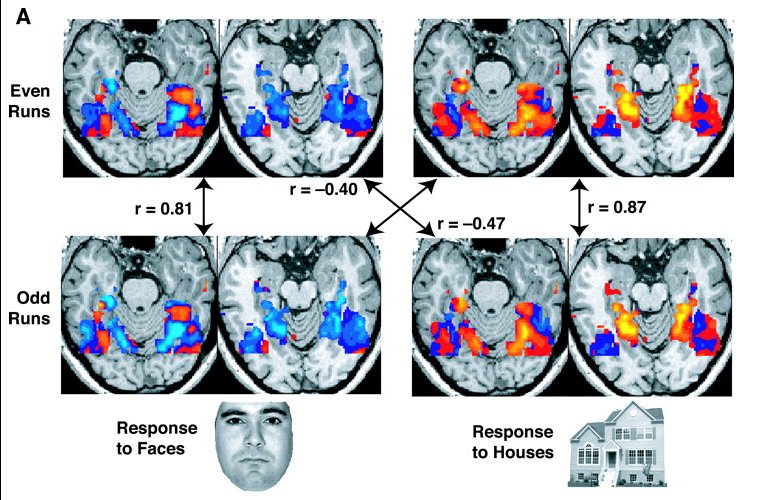
Functional Magnetic Resonance Imaging (fMRI) is a non-invasive neuroimaging technique that measures and maps brain activity by detecting changes in blood flow and oxygenation. Utilizing the principle that active brain regions require increased blood supply, fMRI enables researchers and clinicians to visualize and understand the dynamic aspects of neural functioning. By detecting alterations in the magnetic properties of hemoglobin associated with local changes in blood flow, fMRI produces detailed spatial maps of brain activity, allowing for the identification of regions involved in various cognitive processes, emotions, and sensory perceptions.
In the 1890s, scientists established a connection between neural activity and blood flow/oxygenation. However, it wasn’t until a century later that technology evolved to harness this link. The collaborative work of Dr. Robert Turner and Dr. Ken Kwong led to the development of BOLD fMRI technologies that could non-invasively map activity in the human brain. This innovation quickly gained traction in neuroscience and psychology. Since then, continuous progress has been made, marked by the use of stronger magnetic gradients (more slices) to augment data points and ongoing enhancements in the statistical techniques employed for data analysis.
The Christmas Spirit Neural Network

In 2015, a team of researchers from the University of Denmark utilized fMRI technology to investigate the impact of the holidays on the human brain. The study involved 26 participants who underwent MRI scans while viewing a sequence of 84 images through video goggles. The images alternated between six Christmas-themed images and six everyday images that shared similar forms and figures with the preceding six Christmas images. To prevent pre-bias, participants were surveyed about their Christmas traditions and associated feelings only after the scanning process. Using the gathered responses, the scientists categorized participants into a 10-person Christmas group and a 10-person control group. Six individuals were excluded either because they celebrated Christmas in ways not reflected by the images or because, while participating in ‘traditional’ Christmas activities, they harbored negative associations with them.
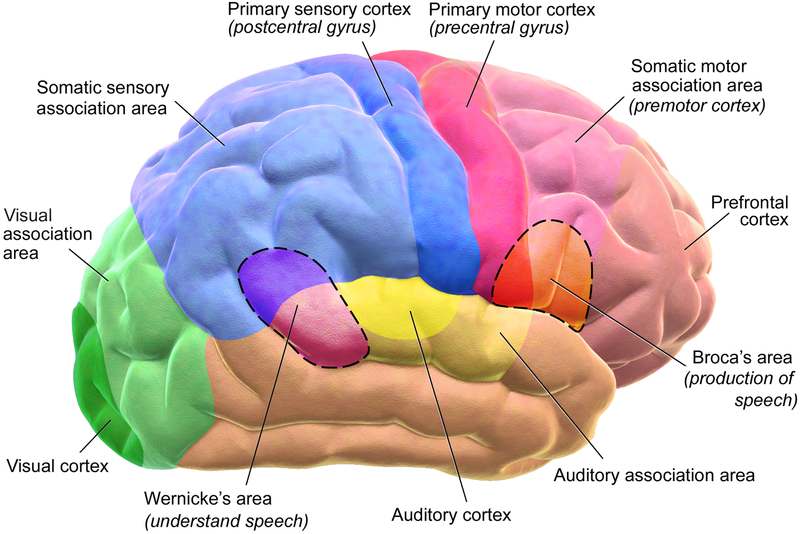
Initial scans showed no baseline difference between the two groups and both groups showed an increase of brain activity in the primary visual cortex when viewing Christmas images versus everyday images. However, the Christmas group also had significant increases in activity in several brain regions including the primary somatosensory cortex, left primary motor cortex, the premotor cortex, the right inferior lobule, the superior parietal lobule, and bilateral primary somatosensory cortex when the images had a Christmas theme. The scientists nicknamed these collective areas the Christmas network. They noted that several of these areas related to human connectivity, spirituality, and strong emotions. For example, the somatosensory cortex aids in retrieving socially relevant information from faces such as emotions, the frontal premotor cortex becomes active when individuals share emotions in a group, and the parietal lobules play a role in self-transcendence, which involves surpassing ordinary limits and experiencing a sense of connection beyond oneself.
Primary Lit to the End of Semester Rescue
Hougaard et al (2015) provides an excellent entry point into navigating primary science literature, expertly gift-wrapped to fit into the end-of-semester holiday festivities. The paper has a modest sample size of fewer than 30 subjects but robust statistical analysis methods and an insightful discussion of results making it an easily approachable and bite-sized introduction into data analysis. Similarly, at just over 2000 words it’s a shorter-than-average read. Even more to point it’s a fun read with the authors taking a light-handed approach that references eggnog and cites the Grinch. While the subject is Christmas the methodology, analysis, and (likely) many of the brain patterns would apply to the many important December holidays. You could even challenge your students to design a study looking for the Kwanza, Hanukkah, Solstice, New Year’s Eve, and Rohatsu. etc. Alternatively you could check out this more secular December read about the science behind Rudolf’s Red Nose that’s posted here. Also, check out our guide to reading science journals and articles here. Happy reading and happy December!
 The Official Blog of Edvotek®