


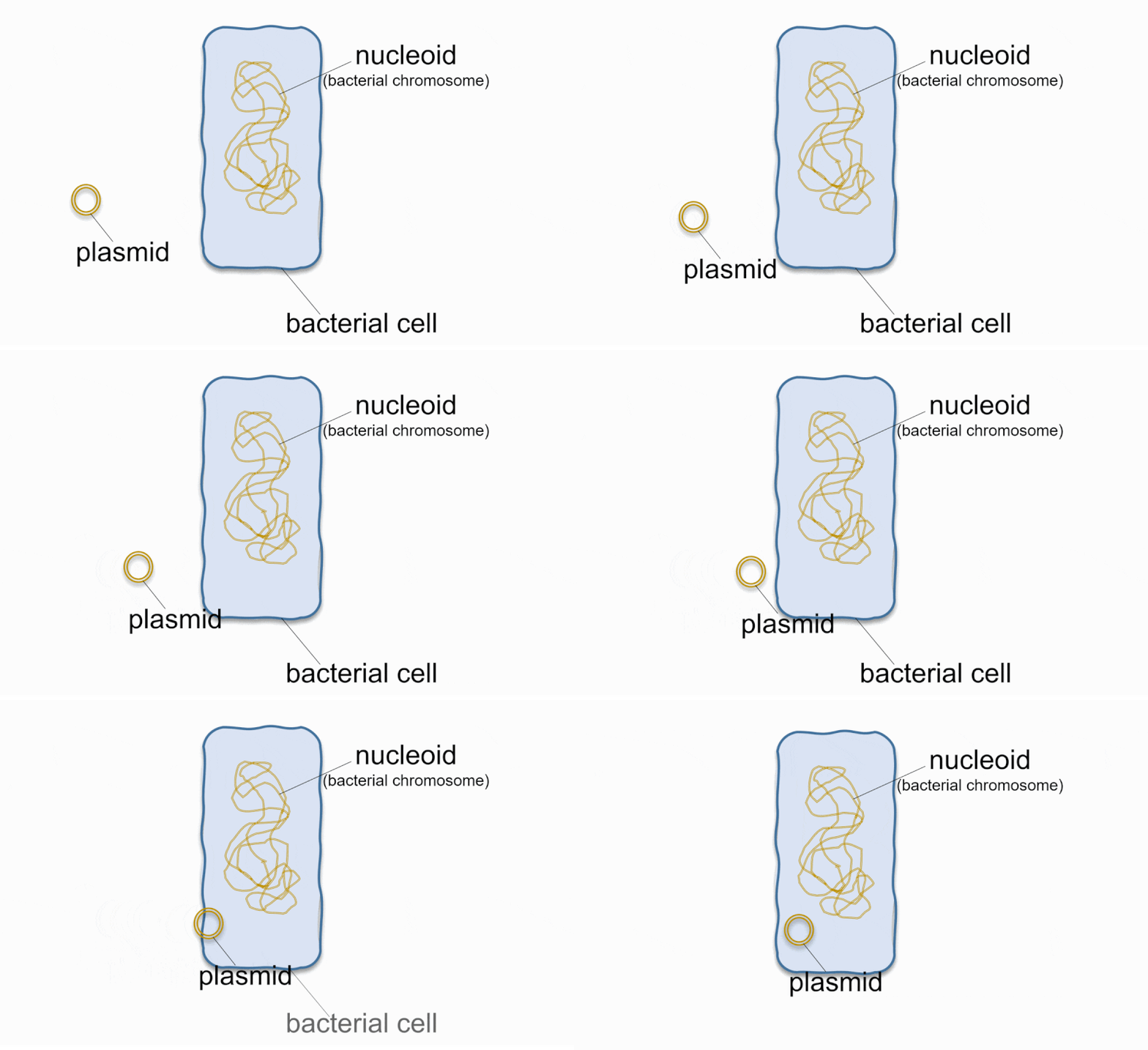
Plasmids are powerful biotechnologies. These unsung heroes have been rocking the world of molecular biology since the 1950s with their independently replicating swagger. While they may seem small, circular, and straightforward, there’s a lot of intricacy and mystery swirling around them. Read on to take a quick dive into the world of plasmids and discover why they’re some of the coolest DNA party guests at any experiment.
#1 “Do I contradict myself? / Very well then I contradict myself”
Plasmids don’t fit neatly into one box. They are commonly depicted as small and circular, yet some have linear structures. Our general understanding is that they are extrachromosomal elements (genetic materials that are situated and/or controlled by factors outside the chromosome), yet some plasmids temporarily integrate into chromosomes. Though typically deemed naked DNA, certain plasmids have their own packaging. Think plasmids are universally mobile and self-transmissible? Nope, many are immobile and incapable of self-directed intercellular transfer. Bottom line – plasmids are diverse and there is so much to still discover about them.
#2 One Diverse DNA Dream Team
In addition to the above variations, naturally occurring plasmids vary greatly in size. The smallest known plasmid is 846 bps long while megaplasmids can range between 1,000,000 and 3,000,000 bps long. Another important characteristic of a plasmid is its copy number or the number of times a particular plasmid is present in an individual cell. Copy numbers in plasmids range from one to several hundred. Plasmid copy number is determined by a combination of factors including the size of the plasmid, the conditions within an individual cell, and replication systems within the plasmid. For example, most single-copy plasmids have partition systems that help distribute a copy to both daughter cells during cell division. Plasmids also vary in the number of genes they carry and of course tremendously in what each gene codes for. Add it all up and there is a ton of diversity. With all the variety in sizes, copy numbers, and gene combos, it’s no wonder that both microbes and scientists alike turn to this diverse group as their go-to genetic vectors.
#3 Naming Dilemma
In the early days, extrachromosomal DNA pieces faced a naming tug-of-war. French scientists François Jacob and Elie Wollman coined the term “episomes” for these entities, while across the Atlantic, Joshua Lederberg championed the name “plasmid”. Fortunately, during a 1968 London symposium, attendees resolved the confusion with “plasmid” emerging as the preferred term.
#4 An Evolutionary Balancing Act
Plasmids are found across the three domains of Archaea, Bacteria, and Eukarya and continue to play a pivotal role in the evolution of these domains. By facilitating horizontal gene transfer, plasmids enable the rapid dissemination of new and beneficial traits within populations. This is particularly useful in challenging or growth-limiting environments, such as in the presence of antibiotics. Another powerful way plasmids help microorganisms adapt is by varying their copy number, which can lead to both a rapid increase in needed proteins and an increase in the likelihood of adaptive mutation within a particular set of genes. But while plasmids offer undeniable benefits, they also have a cost. Plasmid replication and gene expression use the cell’s machinery and can thus be a metabolic burden for the host cell. Consequently, in some situations, plasmid-free cells are at an evolutionary advantage. The push and pull between these pros and cons, as well as plasmids’ own internal mechanisms for guaranteeing their survival, are active and continuing areas of research. (This area of research is too extensive to fully summarize here but is wonderfully introduced in this article.)
#5 A Human Tool Too
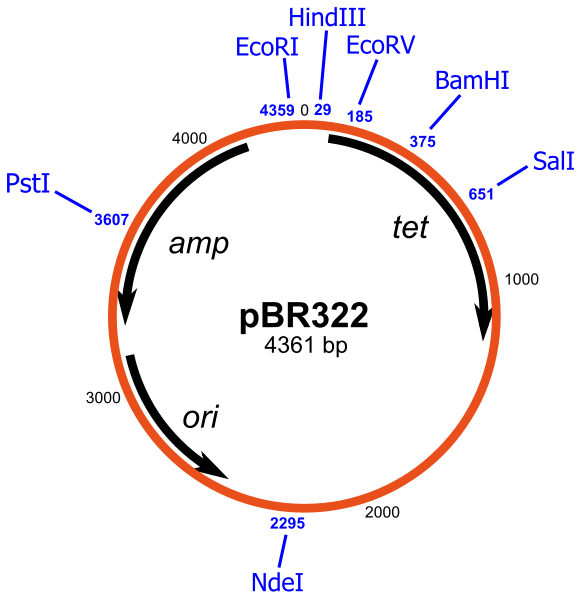
It’s not just bacteria that use plasmids. Plasmids are invaluable tools in biotechnology, offering a plethora of applications across various fields, from brewing biofuels and cleaning up environmental messes to aiding in insulin production and vaccine development. In basic research, they serve as vectors for cloning and expressing genes, allowing researchers to manipulate and study specific genetic sequences with precision. Plasmids are also utilized in the production of recombinant proteins, enabling the large-scale synthesis of therapeutic proteins, enzymes, and other molecules. Moreover, they play a crucial role in genetic engineering. Plasmids used in the lab are often referred to as vectors.
Title image attribution: DataBase Center for Life Science (DBCLS), CC BY 4.0 https://creativecommons.org/licenses/by/4.0, via Wikimedia Commons
 The Official Blog of Edvotek®