


Hidden in the Eastern Pacific Ocean, 560 miles west of South America, lay the Galapagos islands. These volcanic islands were largely unknown until 1535 when a Spanish ship, blown off course, accidentally discovered them. Despite their discovery, the islands went largely unexplored until the second voyage of the HMS Beagle, which had young naturalist Charles Darwin aboard.
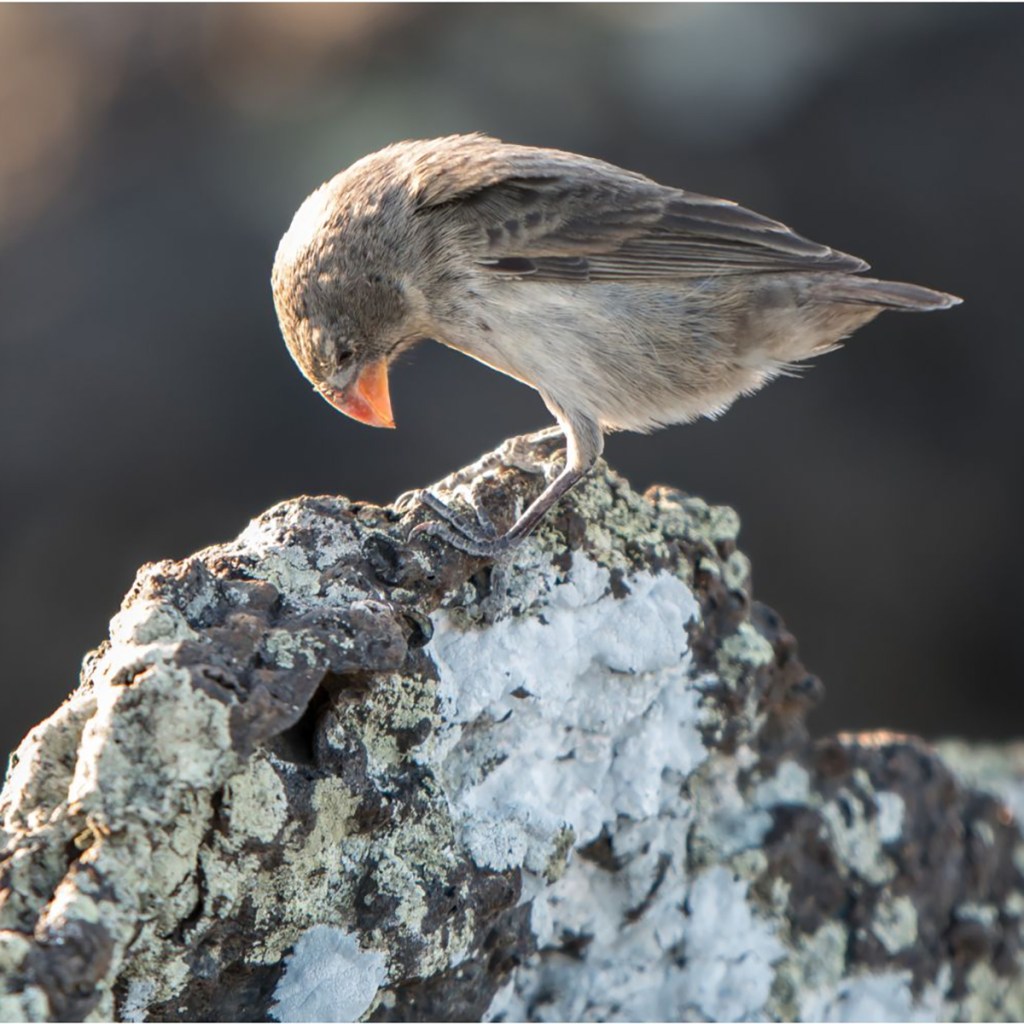
In the Galapagos islands, Darwin began to recognize how well-adapted the animals were to their environments. For example, through drawings and collected specimens, he noticed the incredible diversity in finch beak shapes and sizes. Furthermore, the beaks appeared to be adapted to specific environments and diets. Darwin observed that finches with slender, pointed beaks were better suited for probing into flowers for nectar, while those with strong, sturdy beaks were adept at cracking open tough seeds. Overall, while finches from each island resembled one another, they exhibited specific adaptations, or inherited characteristics, that allowed them to thrive in their respective habitats.
Darwin hypothesized that beak variations among the finch species are a direct response to the different types of food available on each island. This realization led him to formulate the concept of “natural selection“, wherein individuals inheriting beneficial adaptations have a higher likelihood of survival and reproduction, laying the foundation for modern evolutionary theory. These remarkable adaptations illustrate the concept of natural selection, where over time, traits that enhance an organism’s survival and reproduction become more prevalent in a population.
Overall, while finches from each island resembled one another, they exhibited specific adaptations, or inherited characteristics, that allowed them to thrive in their respective habitats. Darwin hypothesized that beak variations among the finch species are a direct response to the different types of food available on each island. This realization led him to formulate the concept of “natural selection“, wherein individuals inheriting beneficial adaptations have a higher likelihood of survival and reproduction, laying the foundation for modern evolutionary theory. These remarkable adaptations illustrate the concept of natural selection, where over time, traits that enhance an organism’s survival and reproduction become more prevalent in a population.
What to expect from EDVO-kit #921:
The objective of this experiment is to investigate the genetic basis of beak size variation in Galapagos finches before and after a drought event using Restriction Fragment Length Polymorphism (RFLP) analysis. By analyzing DNA samples collected from finches with different beak sizes, students determine the association between specific genetic variations and variations in beak size. This allows students to explore the role of natural selection in shaping beak morphology, providing insights about evolution at the genetic level.
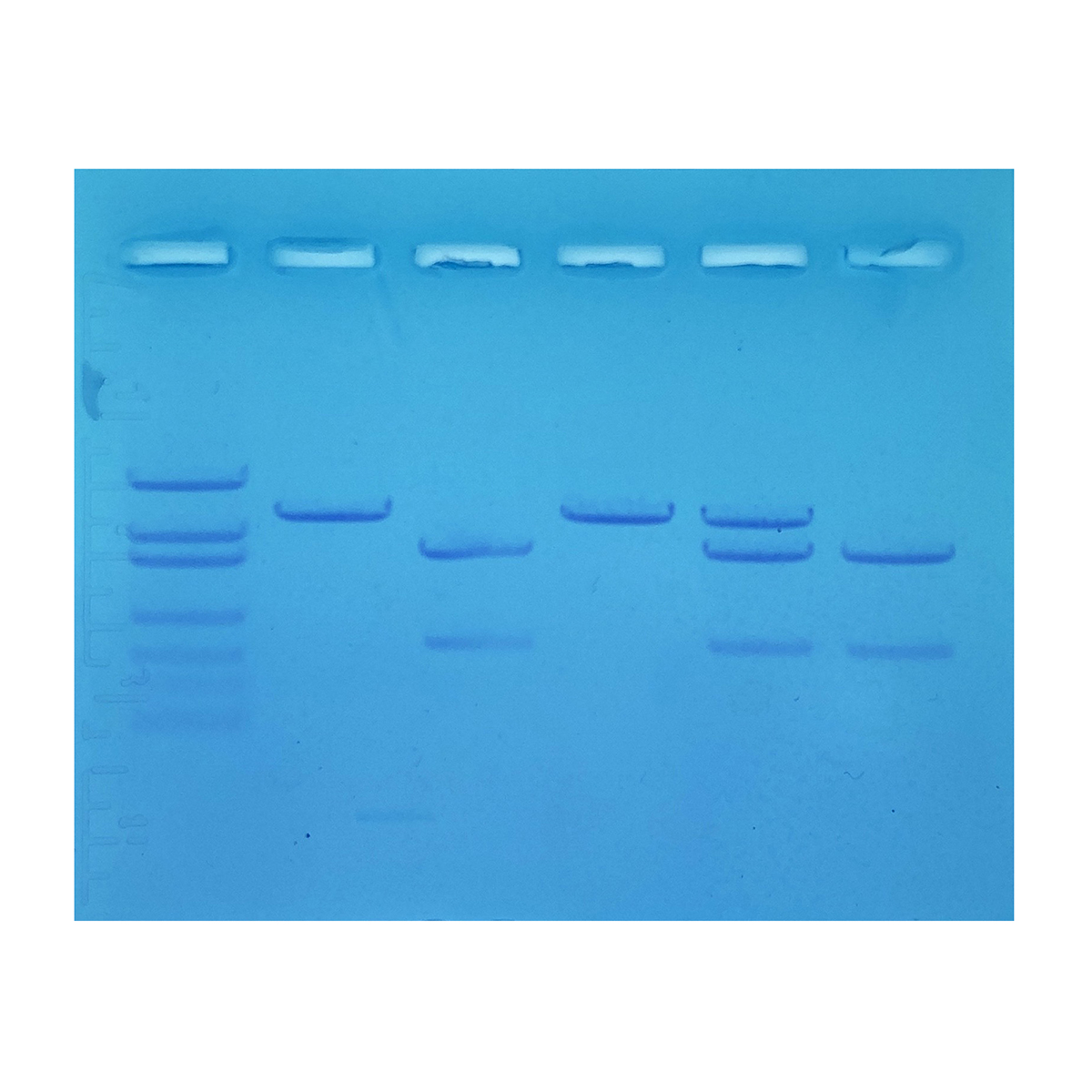
- Introduces PCR-RFLP analysis to analyze specific nucleotide sequences
- Understand how electrophoresis separates differently-sized molecules
- Perform agarose gel electrophoresis
- Meets NGSS HS DCI LS1.A, LS3.A and LS3.B, through the discussion of the structure and function of DNA and heredity and variance of traits.
 The Official Blog of Edvotek®
1 comment
Comments are closed.