
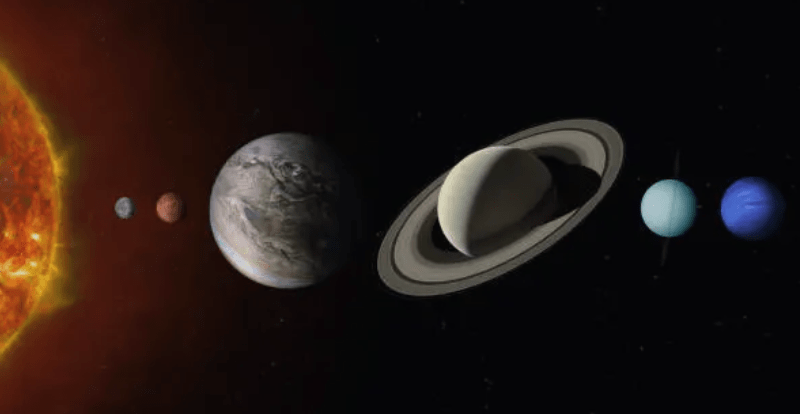

On January 21st, 2025, a rare solar event will begin in which six planets will align and four will be visible to the naked eye, creating a breathtaking celestial spectacle that is sure to captivate sky watchers across the world. Mars, Jupiter, Uranus, Neptune, Venus, and Saturn are lining up in the night sky for a rare treat for astronomy enthusiasts and casual observers alike.
What is rare is not the fact the planets are in alignment, as they are frequently seen along a line, but rather the fact that this many planets can be seen with the naked eye at once. This celestial event doesn’t happen all that often so take advantage while you can take a look outside.
Stargazers will be able to see Mars, Jupiter, Venus, and Saturn by just looking up at the sky. Uranus and Neptune will be visible but require a telescope to see. The six planets will form a large arc in the sky rather than a straight line. To locate the planets, Mars, Venus, and Jupiter will be the brightest objects shining when you look towards the sky. In order to determine which planet is which, Venus and Saturn will be in the southwest with Jupiter up overhead and Mars in the east. If you have a telescope available and want to catch a glimpse of Neptune and Uranus, Neptune will be just above Venus and Saturn while Uranus is above Jupiter.
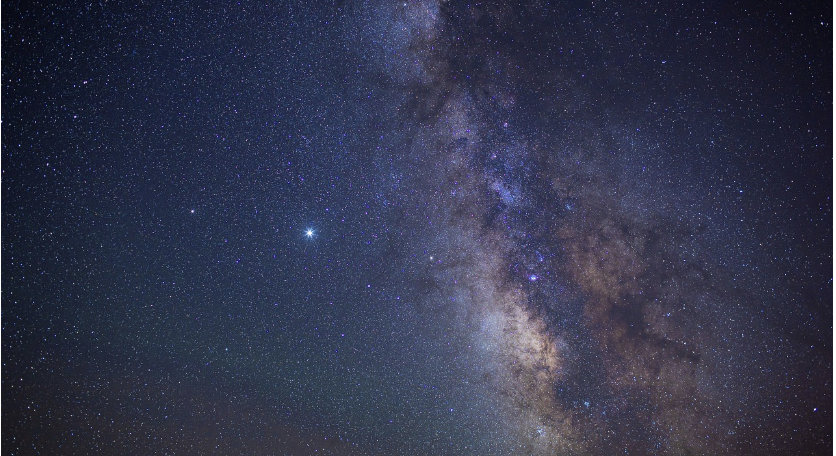
The best time to view all the planets is about 45 minutes after sunset, as this is when the sky begins to darken, providing optimal visibility for celestial observation. To be able to really see these planets, you want to be in a place with limited light pollution, ensuring that the faint glow of distant stars and planets is not overshadowed by artificial lights. Ideally, select a location that offers clear views of the sky, such as a high elevation area or a designated stargazing park, where you can escape the bustling city lights. Moreover, weather conditions should also be optimal for viewing, meaning no clouds or rain/snow, since even a slight overcast can obstruct your view of these magnificent celestial bodies. Planning your stargazing session during a time with low humidity can further enhance the clarity and brilliance of the planets, allowing you to truly appreciate the wonders of the universe.
For even more astronomical wonders, beginning February 28, Mercury will join the planet parade as well, making for a seven-planet lineup that promises to be a spectacular event for sky watchers. Mercury is the closest planet to the sun, which gives it a unique and fascinating characteristic; its swift orbit allows it to complete a full revolution around the sun in just 88 Earth days. This tiny planet, often shrouded in mystery, boasts extreme temperatures that can swing from blazing hot to freezing cold, allowing enthusiasts to marvel at its dynamic environment. As Mercury aligns with its neighboring planets in this grand spectacle, it offers an incredible opportunity to witness firsthand the beauty and intricacy of our solar system.Such alignments not only enhance our understanding of planetary movements but also inspire curiosity about the deeper workings of our universe, reinforcing the allure of astronomy for learners of all ages.
 The Official Blog of Edvotek®