
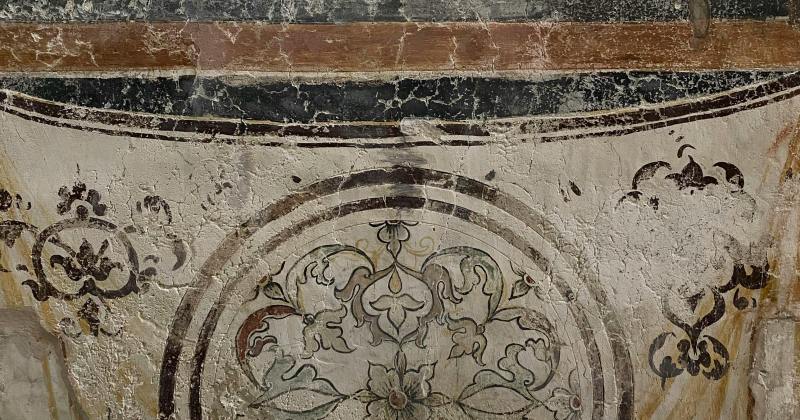

When you walk through an art museum and observe paintings that have been around for decades or even centuries, it’s easy to forget that you’re not looking at the original version of the painting. Throughout the years they have been carefully retouched and restored through the painstaking work of conservators. This complex process of art restoration depends on a foundation of chemistry, materials science, imaging technology, and historical detective work. Art restoration involves repairing or revitalizing artwork that has been damaged, deteriorated, or altered over time. The goal is to stabilize the piece and restore it as closely as possible to the artist’s original intent.
A Brief History of Art Restoration
In the past, art restoration wasn’t very precise. Some methods actually caused more harm. Early art restoration methods involved covering entire paintings in wood-ash, then wiping it off with water, which formed an extremely alkaline substance that was harmful to the painting. The early 1900s marked a major shift in art restoration methods. Museums hired scientists to study and restore artworks more carefully. At Harvard’s Fogg Art Museum, people like Edward Forbes and chemist Rutherford Gettens helped launch modern restoration techniques, including using X-rays to look beneath the surface of paintings.
Assessing the Damage
Before anything is touched, scientists and conservators work together to study the piece in detail. This is where modern imaging and diagnostic tools come into play. Infrared reflectography reveals underdrawings and changes the artist made mid-process. X-ray fluorescence (XRF) maps the elemental composition of pigments, helping identify which materials were used. Ultraviolet light can highlight previous restoration work and surface varnishes. In some cases, micro-samples just a few micrometers wide are taken to analyze the paint layers or to identify organic materials using chromatography and mass spectrometry.
Understanding the Materials
Older artworks were made from ingredients that degrade with time like natural resins, and early oil paints. Restorers must understand the chemical behavior of these materials to avoid doing more harm than good. For example, linseed oil, used in many oil paintings, yellows and darkens over time. Varnishes, originally intended to protect, can become cloudy or brittle. Removing or replacing them without affecting the original paint is a delicate chemical process often involving custom solvents designed to react only with an unwanted layer.
Reversibility
In modern restoration one rule is prioritized over everything else: reversibility. Any treatment applied to the artwork should be able to be undone in the future. This allows for future technologies or discoveries to further refine or correct today’s restoration work without damaging the original. To follow this principle, restorers often use synthetic resins or adhesives that age differently than the original materials and are easily removed. Colors used for retouching are matched to the original and are visually indistinguishable but applied in a way that upon closer inspection with UV they can be differentiated from the original underpainting and removed at a later date.
Digital Tools and AI
AI is also now being implemented to analyze brushstrokes and even predict how damaged parts of a painting might have looked originally. High-resolution digital mapping and 3D scanning also allow for virtual reconstructions of artworks before any physical step occurs allowing conservators to better plan their full restorations. Data archivists also keep detailed records of every step in the restoration process, ensuring transparency and enabling future research.
Famous Examples of Art Restoration
The Sistine Chapel Ceiling: Michelangelo’s ceiling underwent a major cleaning in the 1980s–90s using carefully formulated solutions that lifted centuries of candle soot without harming the paint.
Da Vinci’s “The Last Supper”: Over the years, multiple restorations altered the original, but a 20-year scientific project attempted to recover the few surviving fragments of Leonardo’s hand and stabilize the flaking wall.
The Intersection of Art and Science
While science as a field is often considered diametrically opposed to Art, Art restoration is this fascinating crossroads where science, history, and aesthetics meet. Every particle of pigment or layer of varnish reveals not only the effort and identity of the original artist, but also this long unending scientific battle of conservators against time throughout the ages.
 The Official Blog of Edvotek®
1 comment
Comments are closed.