

This is a guest post from Laura Houghton, a student at Newark Charter School in Delaware.
Hello! My name is Laura Houghton, and I am a high school junior in Delaware. I first became interested in biology when I entered 9th grade and began a biotechnology pathway at my school. My ideas of what I wanted my future career to look like began to narrow to a point as I watched family members struggle with dementia and cancer, and I realized that I want to do research on one of those two things. Thus, when I signed up to take AP Research this past year, I jumped on the opportunity to do a project that could connect me to one of those fields of study.
For this project, I chose to focus on Lewy Body Dementia and Parkinson’s Disease, which are both forms of the broader Lewy Body Disease. One of the main distinguishing pathological features of these diseases is the build up of a protein called alpha-synuclein in neuronal cells. These build-ups, or aggregates, can eventually lead to cell death and the host of symptoms that accompany these diseases. The specific question I ended up researching was, “To what extent do melatonin and catalase supplements affect the survival of alpha-synuclein-expressing Saccharomyces cerevisiae (yeast) cells when exposed to oxidative stress?”
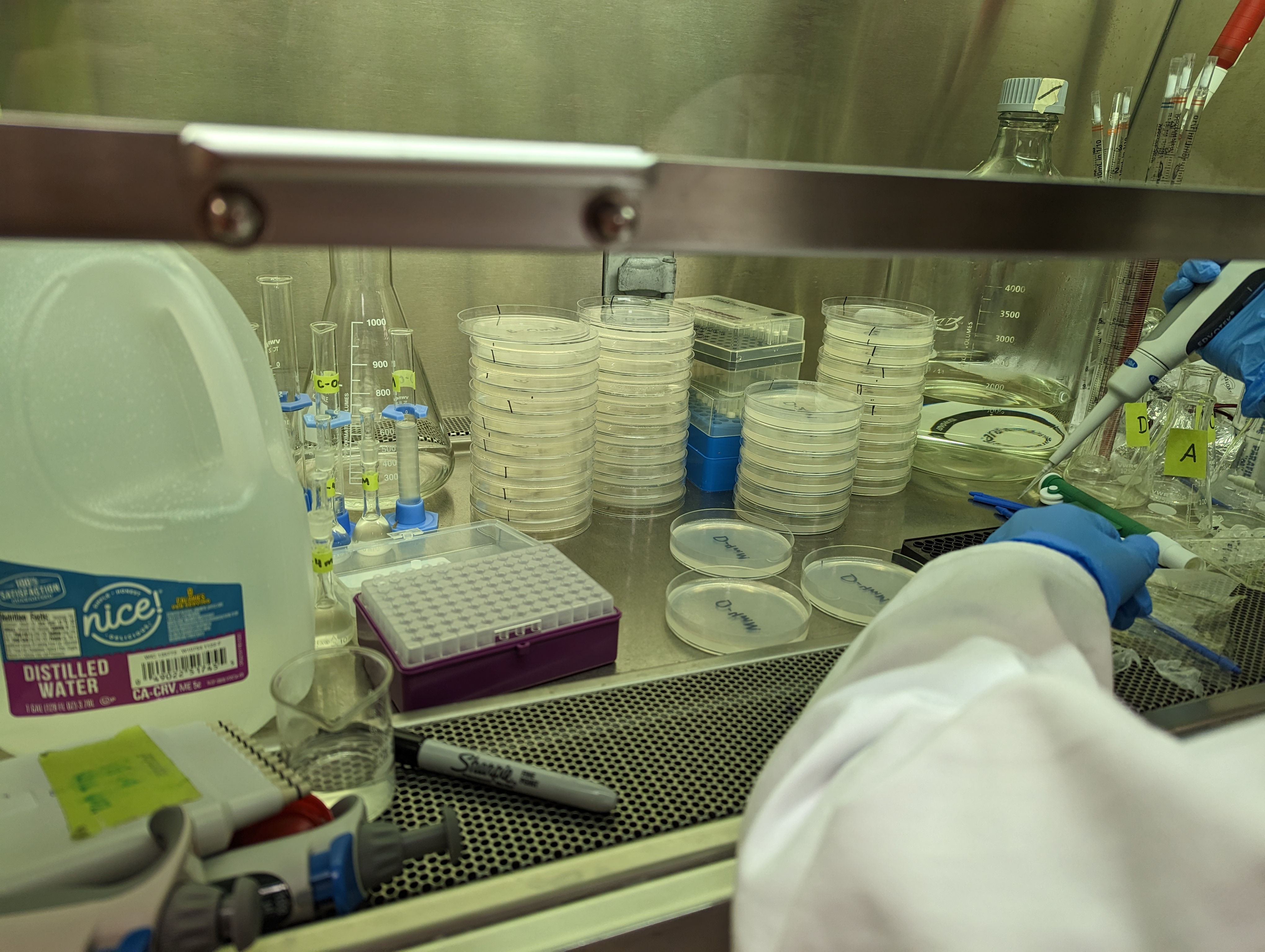
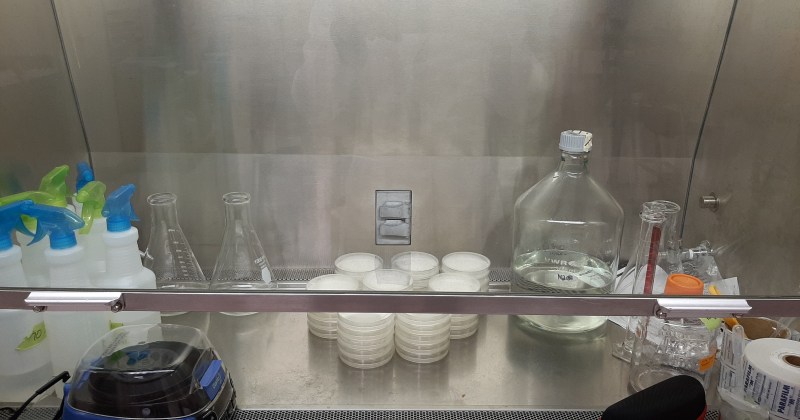
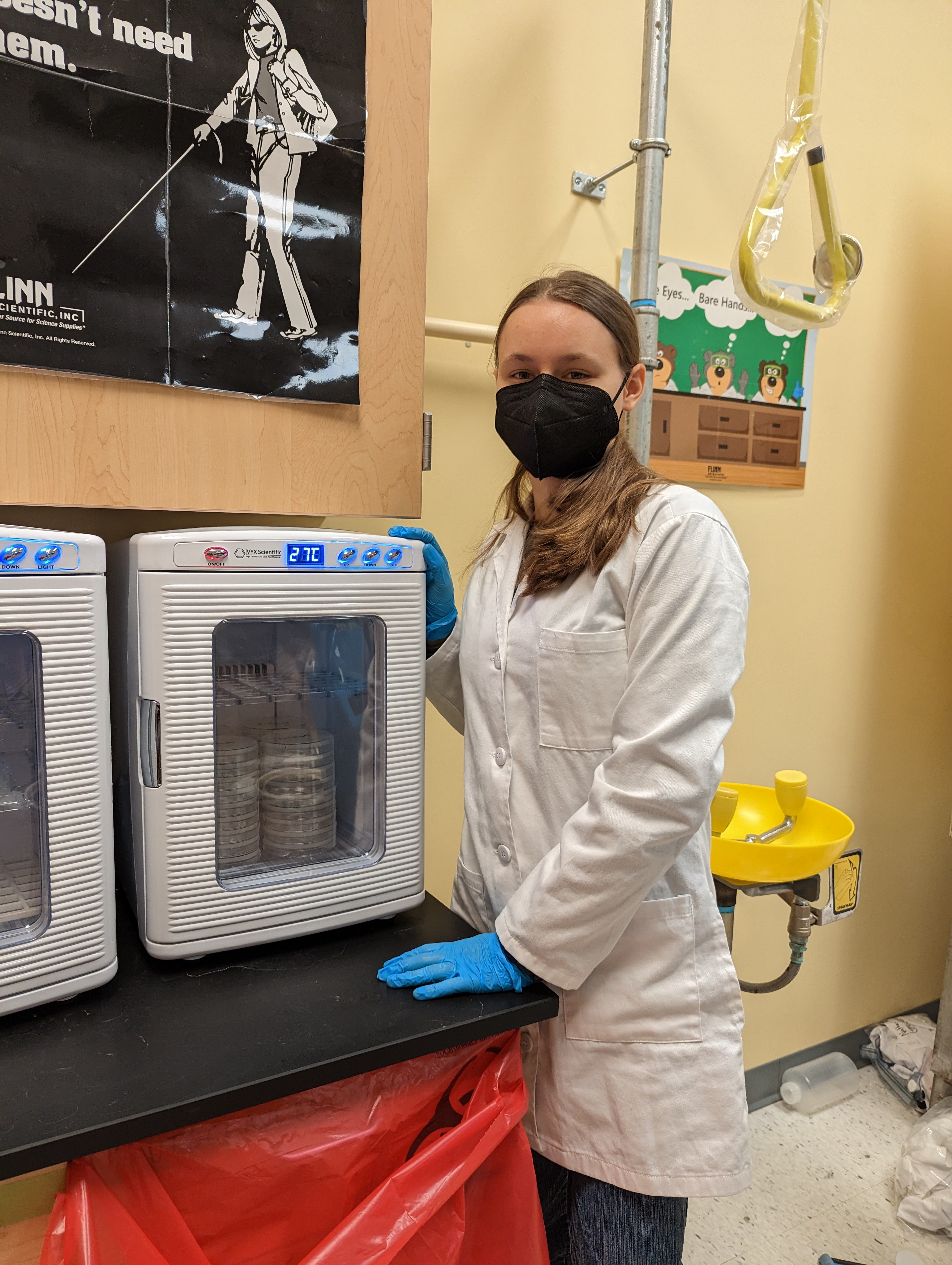
To me, the most amazing part of this project was just the realization of what it was that I was doing. I was carrying out my own experiment to answer a question that had real significance and intrigue for me, which was something I had never done before. I had so much fun watching my yeast cells grow and getting to use and really understand the function of different biotechnology devices and techniques. Plus, I had the opportunity to connect with so many different people in the biotechnology field and see how much the scientific community functions like a team to encourage research and help each other out.
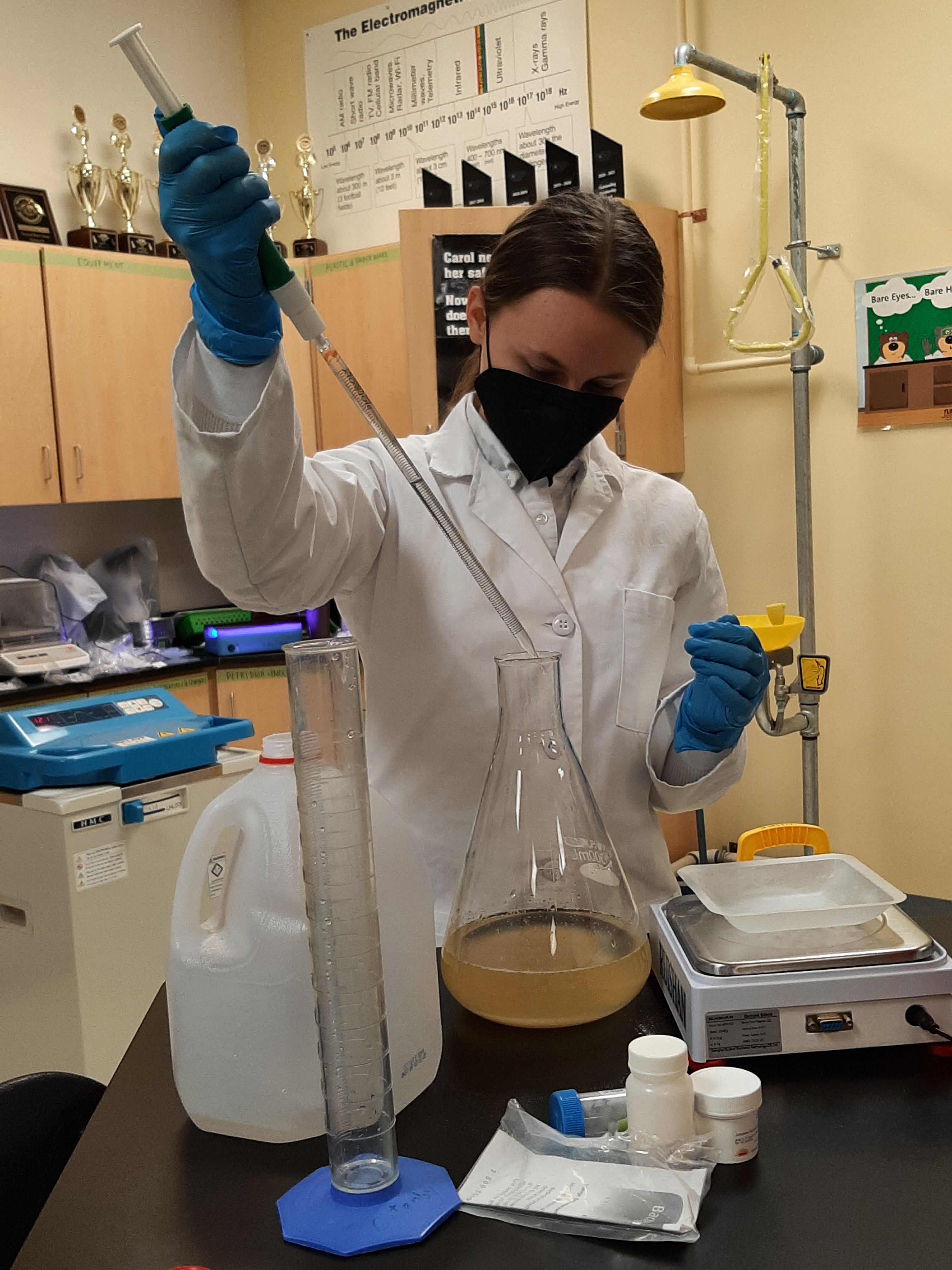
Of course, this project was not without its challenges. I spent many months looking for a lab in which I could conduct my experiment, before finally deciding to try to do it at my high school, with my biotechnology teacher’s equipment. Timing also presented many challenges, as the limited time frame of the project meant I was unable to carry out full replicates of my experiment. In the end, I chose to quantify cell survival by putting samples of my yeast cells on microscope slides and staining them with methylene blue, which stains dead cells blue and leaves living cells white. My results suggested a general correlation between increased oxidative stress and cell death, a relationship supported by surrounding studies. Graphs showing this correlation for each of my main treatment groups are below.
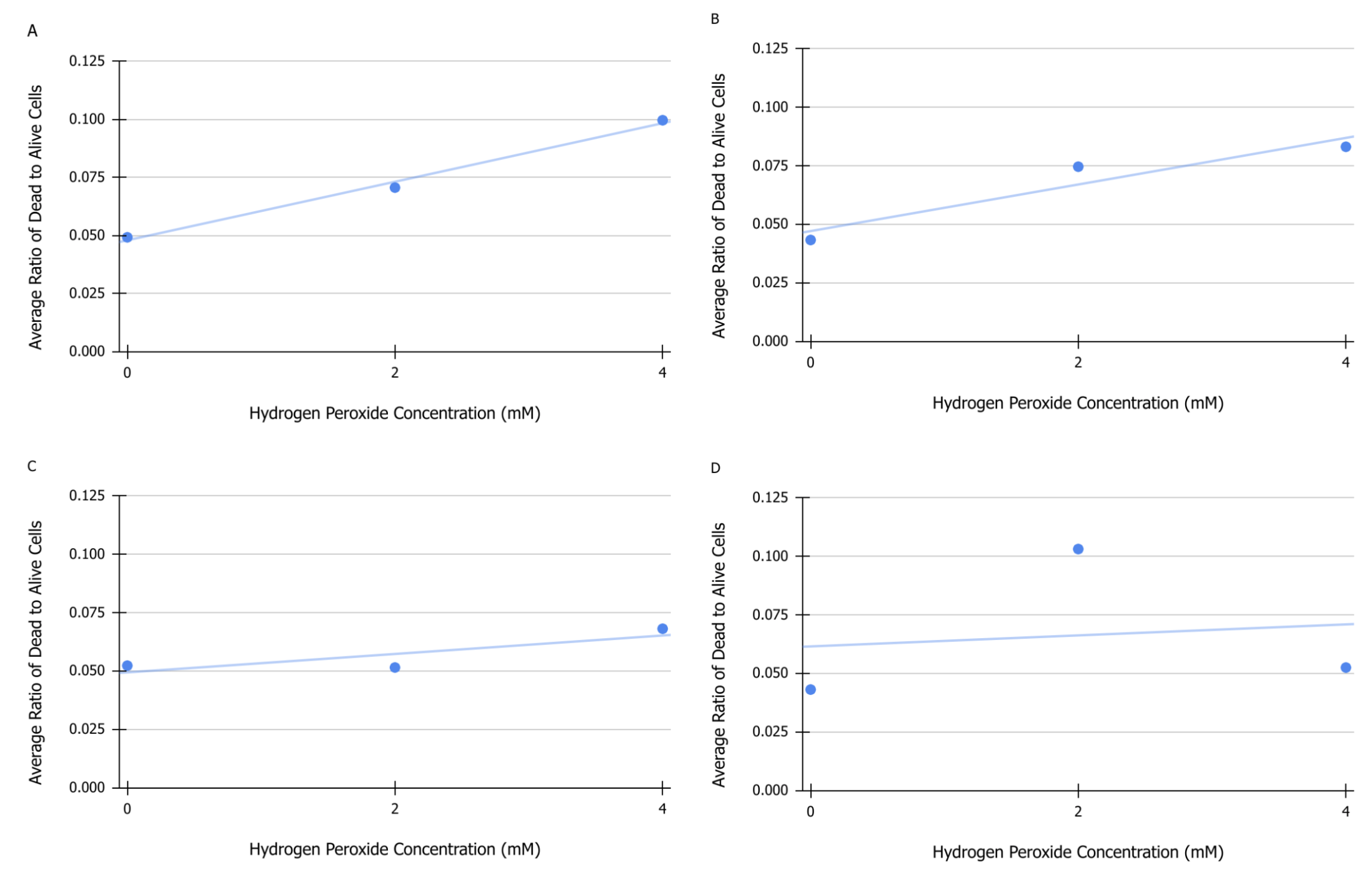
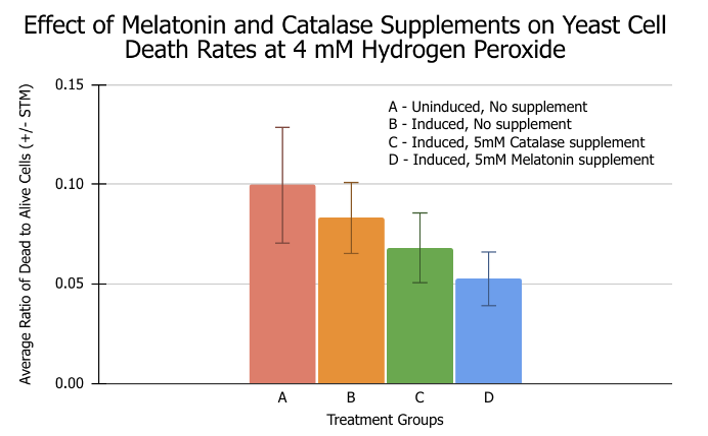
Group A refers to my control group, which was not induced to express alpha-synuclein and did not receive any supplements. All of the other groups were induced, with Group C receiving a catalase supplement, and Group D receiving a melatonin supplement. My results also suggested that at higher concentrations of hydrogen peroxide (meaning a higher degree of oxidative stress), melatonin helped decrease cell death, as shown in the graph below.
I also performed a Western Blot to detect the relative amounts of alpha-synuclein present in my samples, with the idea that a higher protein concentration would mean more aggregation. Unfortunately, my Western Blot was unsuccessful, and I was not able to get any data from it. While I was initially very upset about this, it made for a valuable lesson and showed me that not everything in an experiment will always work out, and that is okay because it is just part of science and part of the inquiry process. This project was an absolutely incredible experience for me and, above all, has shown me that this type of research truly is what I want to do in my life.
If you are interested in reading my full paper, please see the file below.
 The Official Blog of Edvotek®