
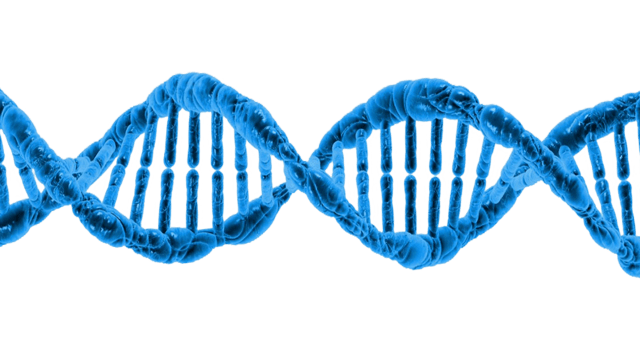

The cell serves as the fundamental building block of life, found in all living organisms, ranging from single-celled bacteria to complex multicellular beings like humans. Inside these cells, there is a special molecule called deoxyribonucleic acid, or DNA for short. Through careful experimentation, scientists have shown that DNA is like the master blueprint responsible for the construction and functioning of an organism. The instructions in our DNA controls biological processes, such as growth, development, cell specialization, neural activity, and metabolic pathways.

Within DNA, certain segments are called genes, which consist of discrete sequences of nucleotides that act as the fundamental units of heredity. Genes carry and pass on genetic information from one generation to the next. They do this by providing instructions to cells on how to produce specific proteins or functional RNA molecules. Consequently, an organism’s genetic makeup, known as its genotype, manifests as observable traits, or phenotype, that we can see or experience.
Changes in a gene’s sequence, or mutations, can affect their normal function. Some mutations have little impact and don’t harm an organism. However, others can be harmful, leading to the creation of faulty proteins or disrupting important processes in the body. These harmful mutations may result in genetic disorders or make someone more vulnerable to certain diseases. On the bright side, some mutations can be beneficial, providing unique traits or improved abilities that help an organism survive and thrive.
If we go back to our blueprint analogy, we can think of mutations like this. Imagine you’re copying your blueprint to share with a colleague, and you accidentally write down a wrong part or step. That’s similar to what happens during DNA mutation. Our cells are constantly copying and duplicating DNA when they need to create new cells or repair old ones. But just like how we might make a mistake when copying something, our cells can also make mistakes when copying DNA.

Studying the effects of mutations on genes is crucial in fields like genetics and medicine, as it helps scientists understand genetic diseases, track how species evolve, and develop treatments to counteract harmful mutations. Below are some common mutations found in DNA sequences.
- Point Mutation: A change in a single nucleotide base (A, T, C, or G) within the DNA sequence.
- Insertion: Addition of one or more nucleotide bases into the DNA sequence.
- Deletion: At the gene level, this can be the removal of one or more nucleotide bases from the DNA sequence. At the chromosomal level, entire segments of DNA can be removed from the chromosome.
- Duplication: Replication of a segment of DNA, leading to extra copies of the same sequence. This can be small, on the order of a few base pairs, or an entire gene or chromosomal segment.
- Inversion: Reversal of the order of a segment of DNA within the genome.
- Translocation: Movement of a segment of DNA from one chromosome to another, leading to rearrangements.
- Frameshift Mutation: Insertion or deletion of nucleotide bases that disrupt the reading frame of the DNA, altering subsequent amino acids.
- Silent Mutation: A mutation that does not result in a change in the amino acid sequence due to the redundancy of the genetic code.
- Missense Mutation: A point mutation that changes one amino acid in the protein sequence to another.
- Nonsense Mutation: A point mutation that creates a premature stop codon, resulting in a truncated and usually non-functional protein.
______________________________
Don’t forget to like and subscribe to our social media!
YouTube: youtube.com/edvotekinc
Twitter: https://twitter.com/edvotek
Instagram: https://www.instagram.com/edvotek/
Facebook: https://www.facebook.com/edvotek/
TikTok: https://www.tiktok.com/@edvotek?
_______________________________

