
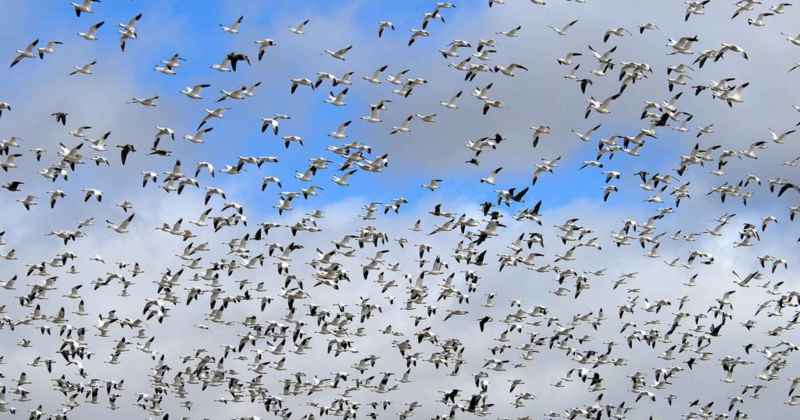

As winter in the northern hemisphere transitions into spring, a remarkable phenomenon unfolds in the skies above us – the grand spectacle of spring migration. Every year, countless birds embark on epic journeys, traversing continents in a display of nature’s precision and resilience. In fact, of the nearly 650 species of birds that spend the summer in North America more than half participate in a yearly migration. These birds migrate from areas of low resources, food and nesting grounds, to areas with increasing resources. In general, this means that birds in the Northern Hemisphere tend to migrate south in the fall before returning north each spring. In this post, we unveil the captivating science behind the awe-inspiring phenomenon of spring migration.
Navigational Marvels: A Bird’s Internal GPS
Picture this: a tiny warbler, weighing just a few ounces, embarking on an epic journey across continents. How does it navigate through the vast skies and unfamiliar landscapes? Birds, it turns out, have a celestial GPS system that relies on the sun, moon, and stars to guide them. During the day, they often use the sun’s position in the sky. Then at night, when the stars and moon come out, these avian adventurers recalibrate their internal compass. It’s like they have a built-in star map, allowing them to maintain a straight course even during long flights over featureless landscapes. In addition to following the patterns of the sun and stars, birds have another superpower – seeing polarized light. The blue sky acts like a giant compass, creating subtle patterns of polarized light that they can detect even when we see a uniform sky. This unique ability helps them maintain direction, especially during cloudy days when the sun might be hidden.
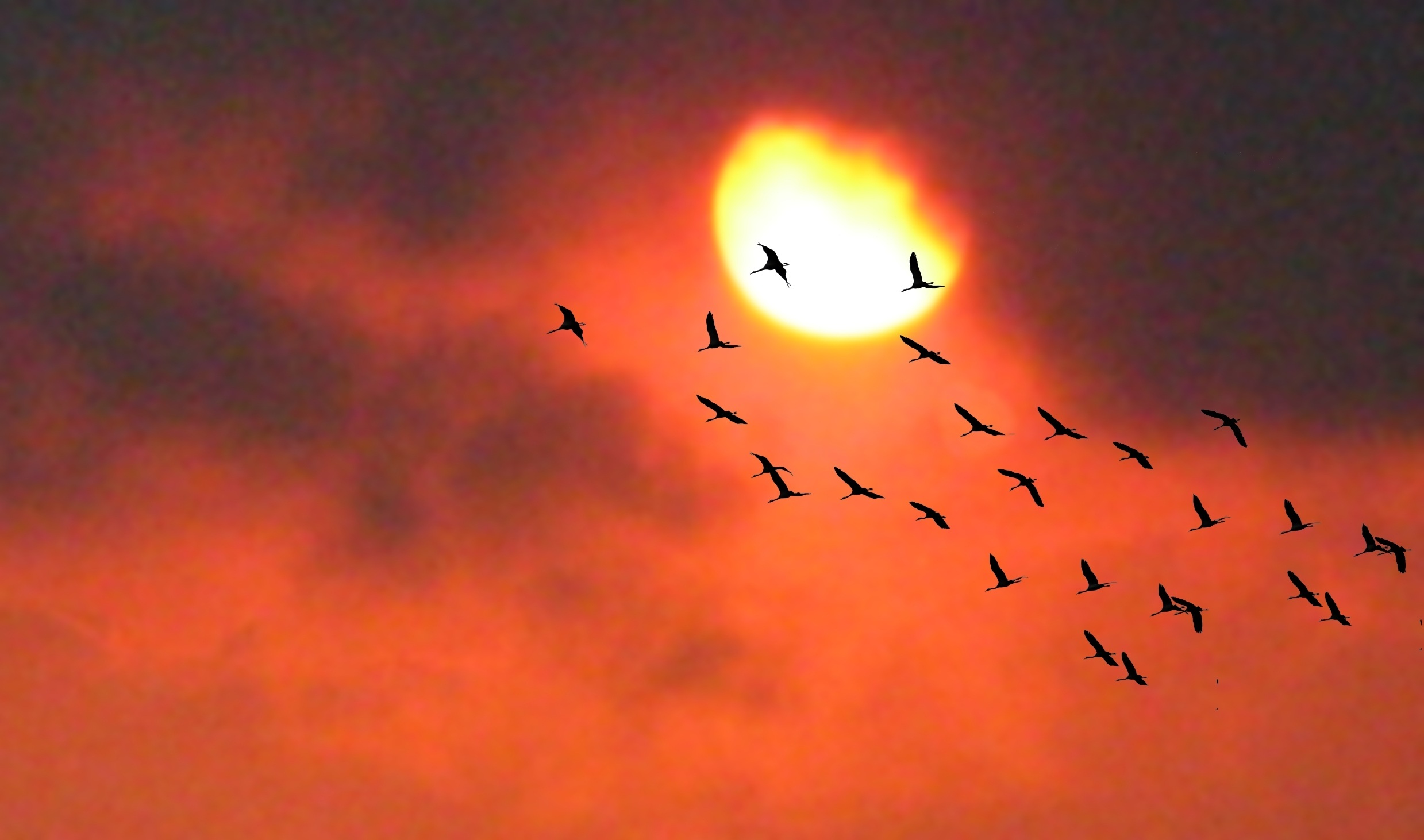
Outside of sight, birds also utilize an “internal compass” that allows them to sense Earth’s magnetic field and use it as a navigational aid. This magnetoreception ability allows them to align themselves with the magnetic field lines, giving them a sense of direction. The intricate details of how birds perceive and use these magnetic cues are still an active area of research for scientists. However, we do know that certain species seem more or less reliant on magnetoreception. When scientists have disrupted the magnetic field around birds they often have difficulty navigating and properly orientating.
Social Learning: Following the Experienced Flyers
Some birds, especially the young ones on their first migration, rely on the experience of their older counterparts. It’s like a migration internship program! By flying in flocks, younger birds can learn and follow the lead of more experienced individuals. The flocks create a communal environment that allows for experienced individuals to guide the group during a migration. In addition, experienced individuals can use vocal communication to guide others. This includes specific calls or songs that serve as navigational cues. The younger birds will learn to associate these vocalizations with proper migration routes and behaviors. Over time, social learning leads to the development of migratory traditions within a bird population. Flocks will follow consistent routes and behaviors year after year, increasing the success of yearly migrations. Importantly, this social learning aspect adds a layer of security to the navigation strategies employed by migratory birds.
High-Tech Options for Ongoing Research
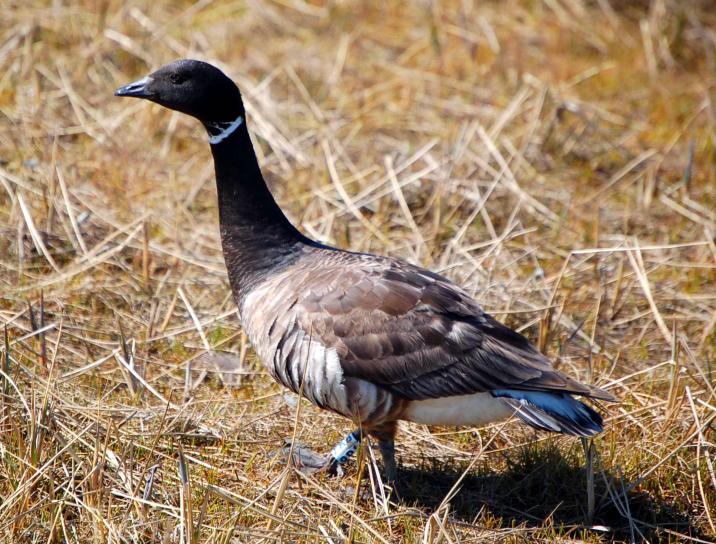
Scientists employ a variety of techniques and technologies to study bird migration, allowing them to unravel the mysteries of these epic journeys. One of the most common methods is banding or tagging programs that attach small, lightweight bands onto the legs or wings of birds. Scientists can then track individual birds during migration, learning important information about their movement, routes, and stopover locations. Observations of individuals or groups of birds can be done through visual observations. In addition, researchers use satellite and radar observations to track data on flocks. Satellite trackers can provide data on altitude and speed, including important information on long-distance movement over bodies of water. Radar observations can help to estimate the number of birds in a flock and can be especially useful for tracking at night. Finally, scientists can utilize molecular techniques to analyze bird DNA. The genetics of individual birds can provide insights into population structure and relatedness within a flock. With sufficient data, scientists can develop models that help track populations during migration and help us understand how flocks might cooperate.
So, next time you see a flock of birds soaring overhead, remember that they are not just flying—they are following a celestial roadmap, an internal compass, and generations of collective knowledge. The world of bird navigation is a symphony of biological marvels, and the more we uncover, the more we stand in awe of nature’s ingenuity.
 The Official Blog of Edvotek®
1 comment
Comments are closed.