



Fireworks have fascinated people for centuries with their brilliant colors, stunning patterns, and thunderous sounds. But behind the spectacle lies an interesting application of science, primarily based in chemistry and physics. In this blog post, we want to dive into the science of fireworks, exploring how the components work together to create these magnificent displays. Additionally, we’ll describe a hands-on STEM activity that safely simulates fireworks without using fire, perfect for your Camp Edvotek campers. (We created our fireworks above using our agar art kit #228, which lets you create masterpieces using microbes!)
The Chemistry of Fireworks
In the core of every firework is a carefully selected combination of chemicals. Together, when ignited, they create an explosion that creates the sound and light that we have come to expect for the holidays. Below is a breakdown of the main components of fireworks:

- Oxidizers: These substances produce oxygen, which is necessary for the chemicals within the firework to burn. Common oxidizers include nitrates, chlorates, and perchlorates.
- Reducing Agents: These chemicals require the oxygen produced by the oxidizers to burn. They then produce hot gases. Examples include sulfur and charcoal.
- Coloring Agents: These metal salts produce specific colors when burned, much like the flame test you may do in chemistry. Some examples include:
- Strontium and lithium compounds produce red.
- Calcium compounds produce orange.
- Sodium compounds produce yellow.
- Barium compounds produce green.
- Copper compounds produce blue.
- Potassium compounds produce purple.
- Fuel: Just like the gas in your car, firework fuels are substances that burn to produces gases that expand rapidly and create an explosion. This generates the thrust necessary to launch the firework into the sky. Black powder, a mixture of potassium nitrate, charcoal, and sulfur, is a common propellant.
- Binders: These paste-like materials hold the powdered chemical mixture together in a solid form that can be loaded into the rocket. Common binders are starch and dextrin.
The Physics of Fireworks

Launching a firework is just like launching a rocket or any other projectile. This is a great opportunity to talk about physics, too! The principles involved in launching fireworks involve:
- Projectile Motion: The firework is launched into the air by the combustion reaction. It follows a curved path through the sky due to the force of gravity.
- Explosion Dynamics: Once the firework reaches its peak, a time-delay fuse ignites the bursting charge, causing an explosion that scatters the reacting chemicals in all directions.
- Light Emission: When the metal salts in the firework burn, their electrons get excited to higher energy levels. As they return to their original states, they release energy in the form of light, producing light in specific wavelengths that create the vivid colors our eyes can see.
- Sound Production: The explosion creates a rapid expansion of gases, producing sound waves that reach our ears as the characteristic booms and crackles.
STEM Activity: Safe Fireworks in a Jar
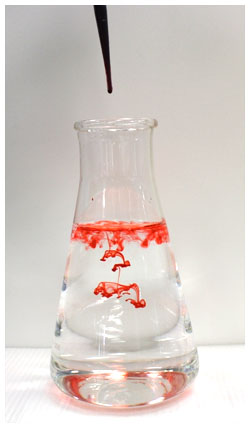
To complement your understanding of fireworks, here’s a safe and educational STEM activity you can do at home or in the classroom: creating fireworks in a jar using simple household materials. This activity will demonstrate the principles of dispersion and density. Like a good scientist, be sure to write down your hypothesis, variables, protocol, observations, and data. (Don’t forget to download our Summer Camp Activity Guide, which contains a lab report page!)
Safety Note: This activity is entirely safe and suitable for children. It does not involve any fire or hazardous materials.
Materials:
- A large, clear jar (e.g., a mason jar)
- Warm water
- Vegetable oil
- Food coloring (various colors)
- A fork
Instructions:
- Fill the Jar: Fill the jar about three-quarters full with warm water.
- Prepare the Oil and Food Coloring: In a separate small bowl, add a few tablespoons of vegetable oil. Then, add several drops of different food colorings to the oil.
- Mix the Oil and Food Coloring: Use a fork to gently mix the oil and food coloring. The food coloring will form small droplets within the oil.
- Add the Mixture to the Jar: Slowly pour the oil and food coloring mixture into the jar of warm water.
- Observe the Fireworks: Watch as the food coloring droplets sink through the oil and disperse in the water, creating a colorful display that mimics fireworks.
Explanation:
- Density Differences: The oil and water do not mix due to their different densities. Oil is less dense than water and floats on top.
- Dispersion: The food coloring droplets are both water-based and more dense than the oil, so they sink through the oil and disperse in the water, creating a beautiful display of colors.
Fireworks are not just a form of entertainment but also a wonderful application of scientific principles. By understanding the chemistry and physics behind these dazzling displays, we can appreciate them even more. And with the fireworks in a jar activity, you can simulate the science that lights up our night skies without any risk of fire in your kitchen (leave that to the baking). Also, don’t forget our
Let us know if you try the fireworks in a jar activity, we’d love to see your results and hear about your experience!
 The Official Blog of Edvotek®
1 comment
Comments are closed.