


While many view art and science as separate fields, they often overlap. Art frequently guides, challenges and inspires the scientific process while scientific advancements have contributed to many artistic works. Incorporating art into scientific subjects is a great way to teach students to think critically and creatively. Today, Camp Edvotek mixes science and art through a fun STEAM activity where campers will create amazing “bio-art” using living microorganisms! Using Edvo-Kit 228, campers will create their beautiful bio-art using color-producing microbes. Through exploring this type of bio-art campers can get creative while learning about the genetic transformation technologies used to create colorful bacteria.
A great example of when art has been incorporated into scientific studies is found in Sir Alexander Fleming’s accidental discovery of penicillin in 1928. This discovery was made when Fleming returned to lab one day and found that the disease-causing bacteria staphylococci had been killed by a fungal contamination on a petri-dish. Fleming is believed to be the first to use colorful microorganisms as “paints” to create bio-art on a petri dish. It is speculated that Fleming might have discovered the Penicillum fungus while searching for colorful microorganisms to be used as “paint” for his artwork.
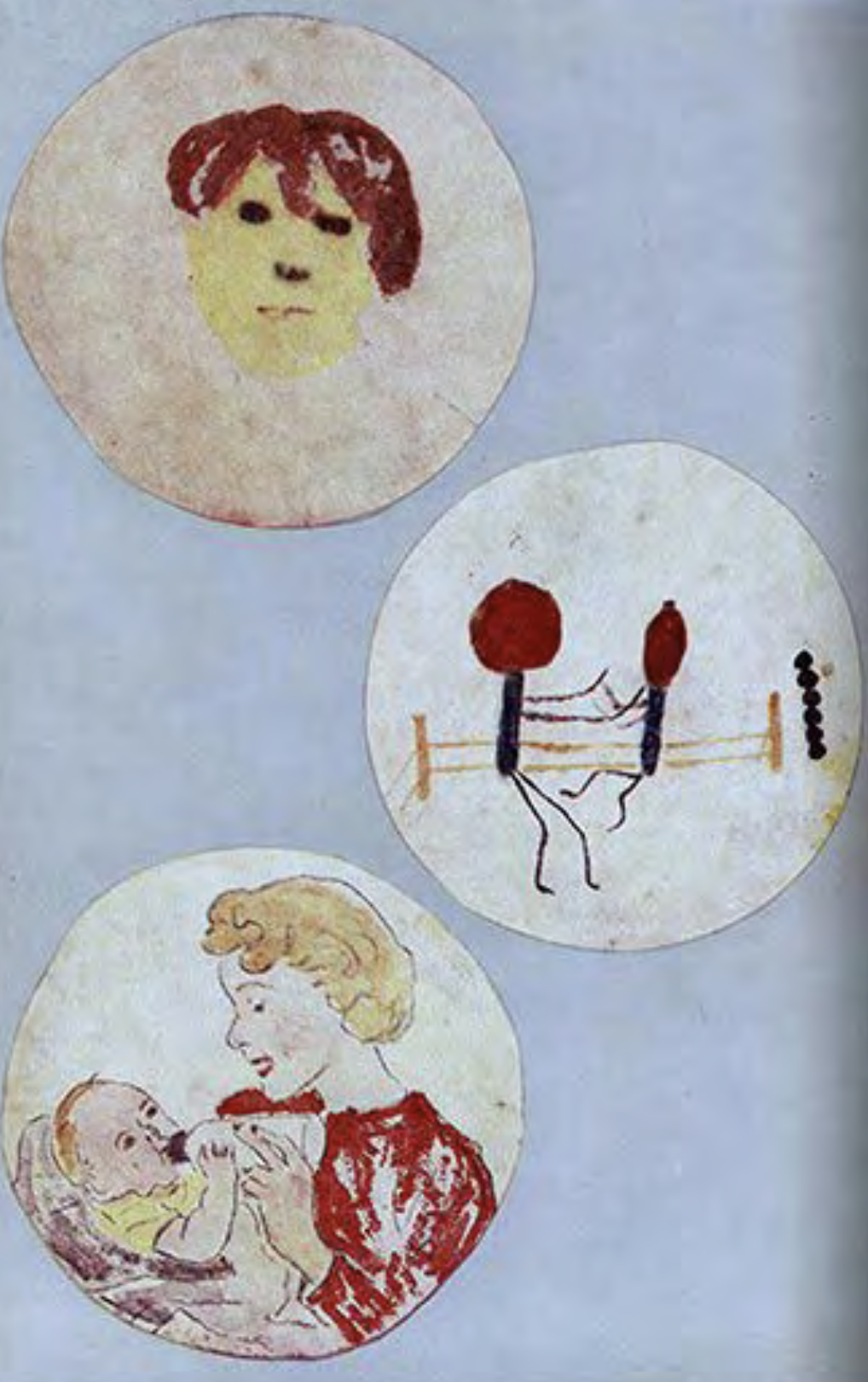
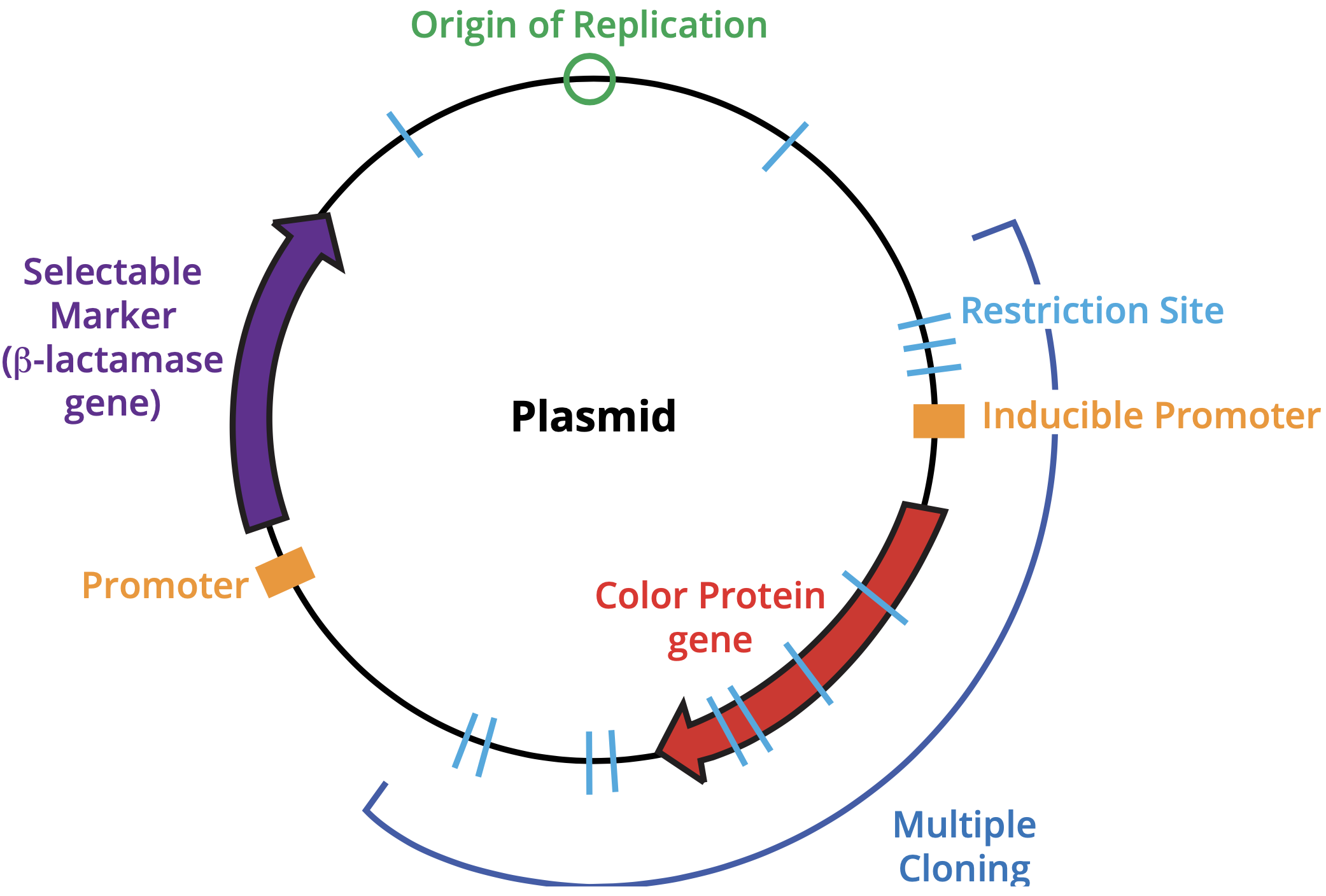
In this lab, Campers will use colorful bacteria to create agar art just like Sir Alexander Fleming did. The colorful bacteria used as paints in this kit have been genetically engineered to express proteins of a specific color. These strains were created using a safe strain of E. coli that easily accepts and maintains foreign DNA. The foreign DNA used here is a small circular piece of DNA called a plasmid and contains the following:
- Origin of Replication: A DNA sequence that allows the bacteria to copy the plasmid.
- Multiple Cloning Site: A DNA sequence that contains many restriction enzyme sites which allow scientists to introduce additional gene sequences to the plasmid.
- Promoter: A DNA sequence that recruits RNA polymerase to the beginning of the gene sequence in order to begin transcription and subsequently translation of the gene product.
- Selectable Marker: A gene that encodes ß-lactamase, an enzyme that degrades the antibiotic ampicillin and thus allows cells containing the plasmid to grow in the presence of ampicillin.
- Inducible promoter: A promoter that can be turned on and off depending on if a small molecule is present. In this case, the small molecule isopropyl-ß-D-thiogalactopyranoside (IPTG) must be present to promote transcription of the color protein gene.
- Color Protein Gene: A new gene sequence encoding the specific color protein to be expressed in the cell upon induction with IPTG.
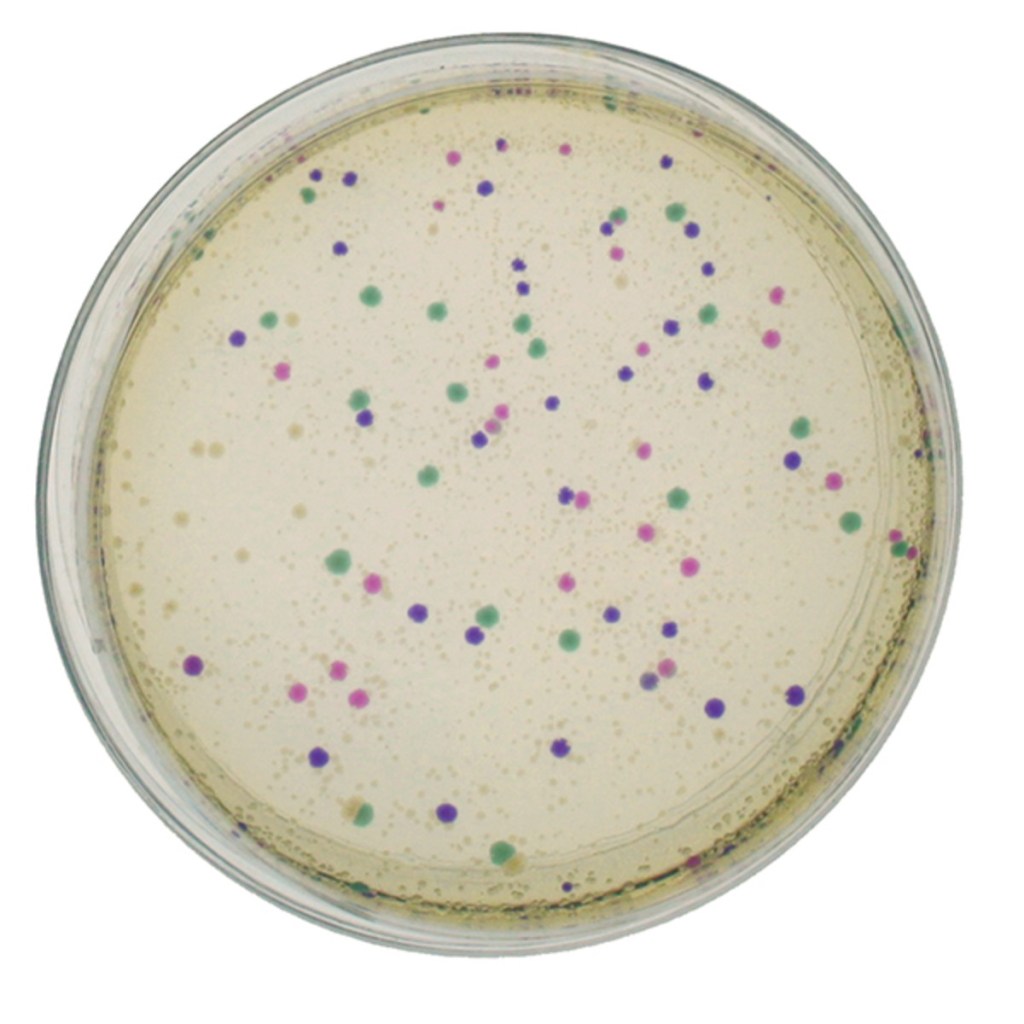
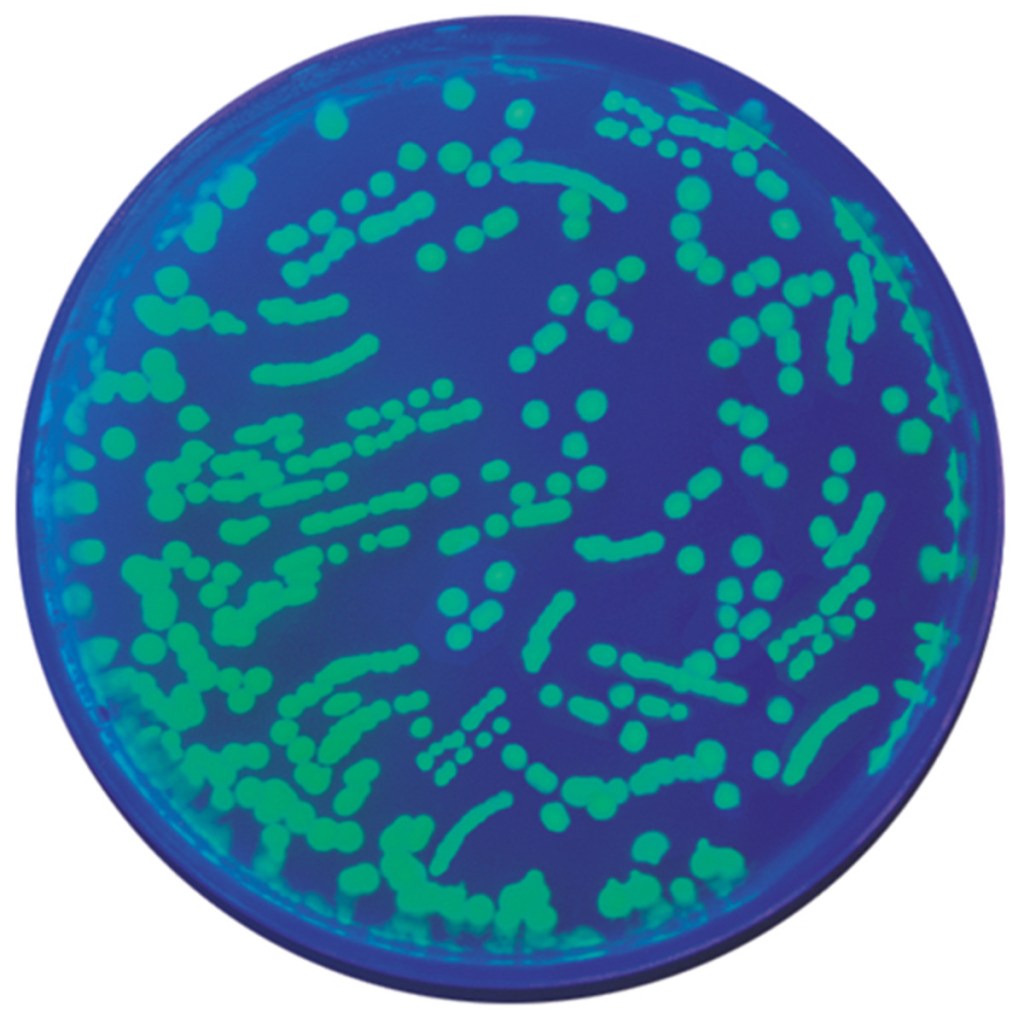
The experiment is easy to complete in an hour and the agar art will take 24-48 hours to develop depending on the temperature you incubate your plates at. The kit includes everything you need to create amazing agar art using four different colors of bacteria and has enough materials for 25 agar canvases. While not necessary, an incubator set to 37 ˚C can be used to obtain results in 24 hours or less. We also recommend using a TruBlu transluminator to help visualize fluorescent green and blue pigments.

This is a great activity that intersects art, science and technology to create awesome bio-art. If your campers still want to do some more coloring after the activity, they can feel free to color in the STEAM badge on page 38 of the Camp Edvotek activity guide and coloring book. Make sure the campers aren’t using the bio-paint bacteria to color their activity guides! For campers interested in further investigating bacterial transformation and/or chromo-bacteria check out these kits below:

We hope you find this activity educational and entertaining. If you try out this activity, please share your results with us on social media or email them to curriculum@edvotek.com. We would love to see your artwork! Additionally, stay tuned for this year’s American Society for Microbiology Agar Art Contest and consider submitting your artwork there!
 The Official Blog of Edvotek®