


The 2024 Paris Summer Olympics are in full swing, showcasing fantastic feats of athleticism every day. While the Olympic games are renowned for their prestige, entertainment value and socio-economic benefits, the environmental impact of the Olympic games has become a larger topic of discussion in recent years. The organizers of this year’s game have decided to make sustainability a central part of the event. Here are several articles related to environmental science at the olympic games!
1. How Climate Change Impacts the Olympics:
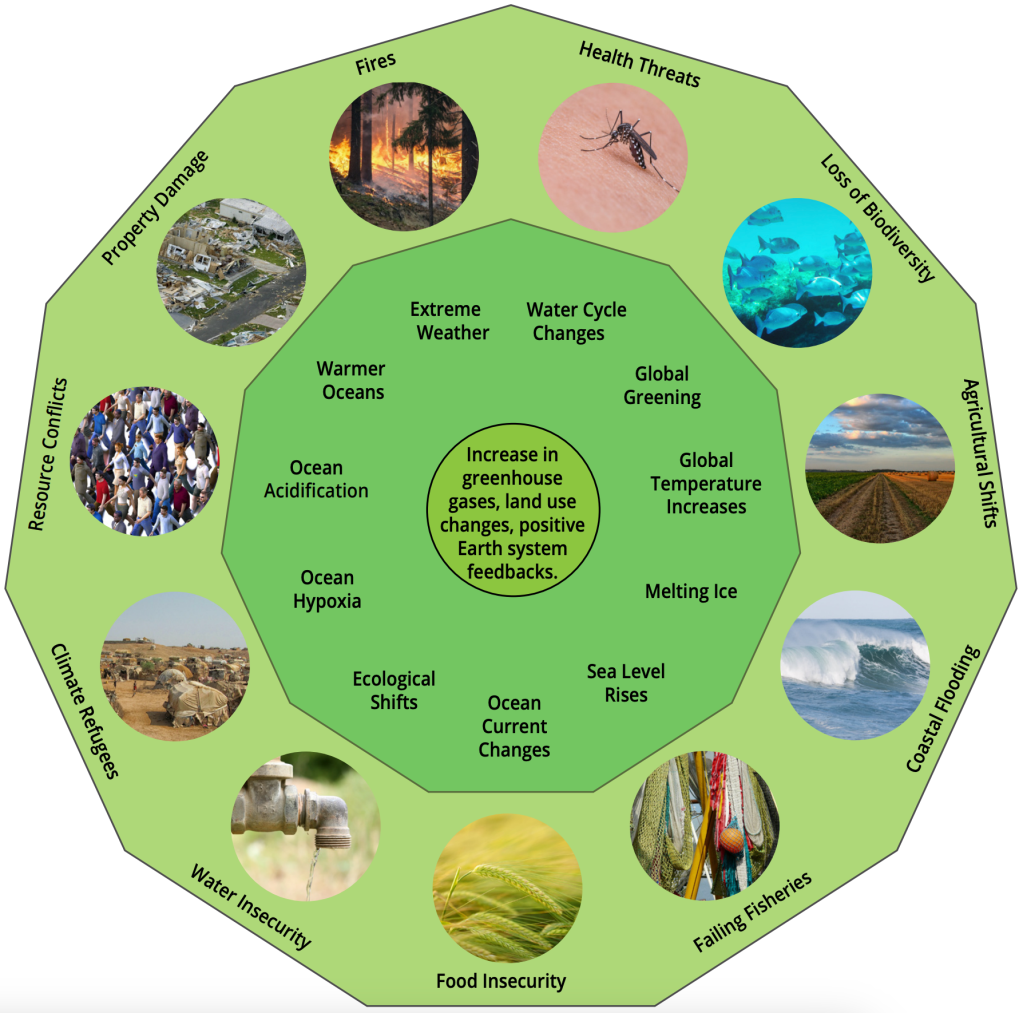
The burning of fossil fuels and major land-use changes over the last two hundred years has drastically increased the planet’s atmospheric carbon dioxide levels. Increases levels of atmospheric carbon causes many environmental changes such as an increase in average annual temperatures, extreme weather events, melting ice, rising sea levels, ocean acidification and changes to ecosystems across the globe. These are all potential challenges when it comes to planning Olympic events. Winter sports have taken the biggest hit, as temperature rise and alterations in weather patterns have shortened winter sport seasons in many countries. The International Olympic Committee has already decided to push back its decision to select winter olympic host cities for 2030 and beyond in order to more accurately select a climate-stable location. The summer Olympics also face issues, primarily regarding extreme heats and weather events. Extreme heat in the summer impacts the quality of competition and, more importantly, the health of athletes and fans. A heat wave has already struck Paris, with many athletes competing in temperatures over 90 degrees Fahrenheit. These challenges have been addressed in several ways including instructing athletes to safely condition themselves to exercise in high temperatures before the event, developing plans to reschedule events if weather interferes with competition and increasing health and safety measures at the games.
2. The Most Sustainable Olympics Yet:
The International Olympic Committee has championed this year’s Paris Olympics as the new standard for sustainability in global sporting events. The event organizers for Paris 2024 have taken an approach centered around reducing the negative environmental impacts (primarily carbon emission, pollution and wasted resources) while maximizing the socio-economic benefits provided by the games. Specifically, the organizers have promised to cut carbon emissions by fifty percent when compared to the average over recent years. Paris 2024 is completely powered by renewable energy sourced locally and utilizes pre-existing venues to minimize the carbon footprint from new construction. What makes this Olympics so revolutionary is that sustainability has been taken into consideration when planning every aspect of the event without sacrificing the quality of the games. Whether it’s the food at the event, public transport around the venue, equipment used at the event, building practices, or energy sourced everything has been planned with sustainability at the forefront.
3. The Seine Scandal:
Since 1923, swimming in the Seine river has been off-limits due to how polluted the waterway is. However, in lead up to the 2024 Olympics, Paris undertook a large project with the goal of cleaning up the river so it could be swimmable for Olympic events. This project involved significantly improving runoff, sewer and wastewater treatment infrastructure. Levels of pathogenic bacteria in the water have been measured closely and event organizers were confident that their infrastructure improvements in combination with warm temperatures and strong ultraviolet rays from the sun would kill off bacteria to provide a swimmable Seine for the event. However, runoff from heavy rains have contributed to elevated levels of fecal bacteria such as E. coli in the river which has delayed several events. The poor water quality of the Seine creates health risks and impedes on athletic performance. Several athletes have gotten sick after swimming in the Seine and some are frustrated by the constant uncertainty of their event being rescheduled due to poor water quality. Other athletes do not mind as much and believe this is just part of the competition.

4. Traditional Conservation Methods in Tahiti:
A more positive story regarding aquatic Olympic events can be seen at the surfing venue for this year’s Olympics in Tahiti. A traditional Polynesian environmental conservation method called “Rahui” has been employed by locals on the island since pre-colonial times. The practice of Rahui involves restricting human impact on the environment of a given area. This is typically done by establishing temporary no-fishing zones and protecting local creeks and rivers from pollutants. Taro crops are planted in these creeks and rivers because they are known to capture sediment from agriculture or other pollutants. Thus, taro crops act as a biological filter that reduces the amount of pollutants that can flow out into the ocean. No-fishing zones are established to give aquatic ecosystems time to rejuvenate after being overfished. Rahui is significant because it’s more than a legal mandate to conserve the environment. Rahui is a customary practice and a ground-up approach towards environmental sustainability where the community members feel personally invested. This was evident when planning the Olympic surfing event. After major backlash from Tahiti residents, the Paris 2024 organizers were pressured to scrap their original plans for the surf venue in favor of a more sustainable, collapsible surf tower.

We hope you found these articles interesting and informative! The Olympics are a great topic, but keep in mind that many current events can be related to environmental science. For those interested in further investigating environmental science, check out these kits below: