
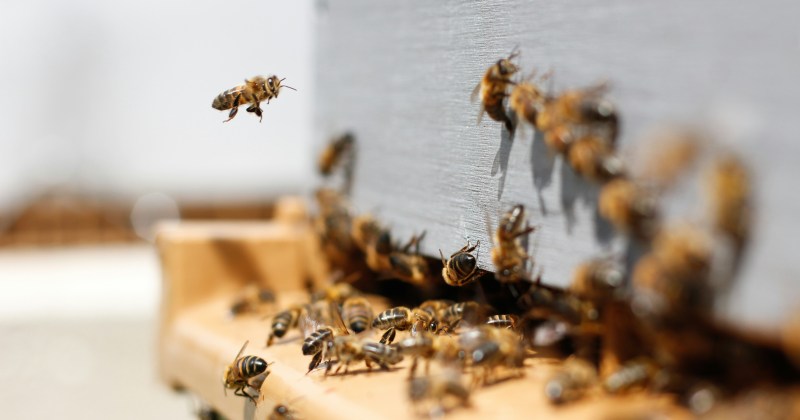

Have you ever wondered how honeybees know who’s the queen and who’s a worker bee? Let’s dive into the world of bees and learn how scientists use something called DNA methylation to tell the difference between these buzzing superstars!
Meet the Hive!
In every hive, there are three main types of bees that work hard to keep the colony running: the queen bee, the drone bees, and the worker bees. The queen is the boss bee! She’s physically bigger, lays fertile eggs, and keeps the hive happy and growing. Drone bees have very few hive tasks as they are only to mate with the queen bee! On the other hand, worker bees contribute primarily to the hive’s productivity and are the busy bees that help gather food, take care of baby bees, and protect the hive. But here’s the big question: How does a baby bee become a queen or a worker?
Every living thing, from bees to humans, has DNA, which is the code that gives instructions on how to build and run our bodies. In bees, this code is the same for both the queen and worker bees! So, if they have the same DNA, what makes them different? The answer lies in something extra on top of the DNA called DNA methylation.
What Is DNA Methylation?
Imagine DNA as a recipe book for the body. Sometimes, there are sticky notes called “methyl groups” that get added to the pages. These sticky notes don’t change the recipe itself, but they tell the body to skip certain parts of the recipe or use others. This process of adding sticky notes is called DNA methylation, and it helps decide whether a bee will be a queen or a worker!
When a baby bee starts to grow, DNA methylation is used to either turn “on” or “off” certain genes (those special instructions in the DNA). In queen bees, some genes that help them become bigger and lay eggs are turned on, while in worker bees, those same genes are turned off, and genes for doing hive chores are turned on instead.
Using Science to Spot the Queen
Scientists can look at a bee’s DNA and check which genes have sticky notes (methyl groups) attached. By running cool experiments in the lab–like exploring the effects of DNA methylation on restriction enzyme activity followed by a gel electrophoresis—they can see the patterns of DNA methylation. These patterns are different for queens and workers, even though they have the same basic DNA!
Therefore, we can take two bees from the hive: one queen and one worker. By checking their DNA, we can figure out if the “queen genes” or “worker genes” are turned on or off using these looking at the methyl groups attached to their DNA. It’s like being a detective and figuring out who’s in charge of the hive based on the clues in their DNA!
If you’re interested in running an experiment like this, you’re in luck! Edvotek has released a new kit: Bee-coming Royals: DNA Methylation of Honey Bees! It is the perfect experiment to capture the attention of both students and teachers while also teaching important lessons on DNA methylation!
What Else Can You Do?
If you ever get the chance to visit a bee farm or learn about bees in school, remember that these tiny creatures are more than just buzzing insects! They’ve got a whole system of science working inside them to help decide who becomes queen and who becomes a worker. And thanks to DNA methylation, we’re able to figure it all out!
So, next time you spot a bee, give it a little nod of respect. Whether it’s the queen or a worker, every bee has an important job, and DNA helps them figure out their role!
Bee Fact: Did you know that the queen bee can lay around 2,000 eggs a day? That’s a lot of baby bees!
 The Official Blog of Edvotek®
1 comment
Comments are closed.