
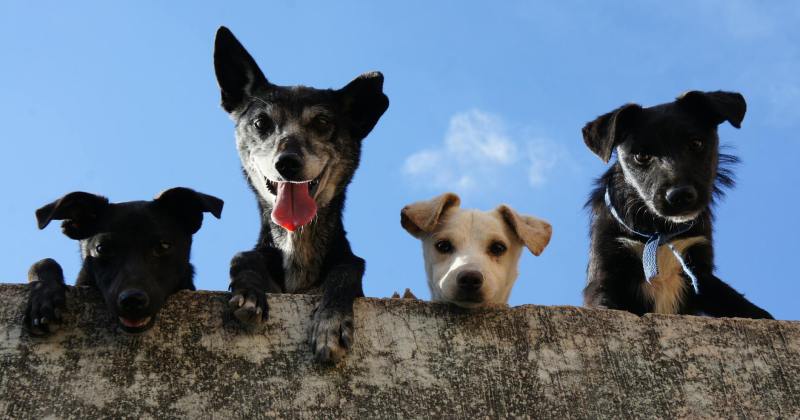

Whether it’s the news or even a commercial, everything feels tense, high-stakes, and heavy these days. This post is none of those things. It’s about pets and science—two undeniably great things, made even better together. So, if you’re ready for a quick break, keep reading to discover some of the four-legged heroes of the science world.
Chaser
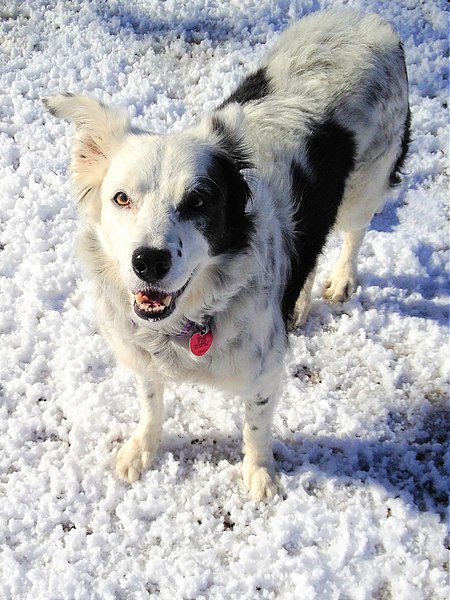
Chaser, a border collie gifted to Dr. John Pilley, a behavioral psychologist, for his 76th birthday, was more than just a cute surprise—she became a research partner. Over 14 years, Chaser mastered identifying and retrieving over 1,022 toys by name, giving her the largest (tested) word memory of any non-human animal. Chaser didn’t just fetch toys and break records; she also helped unlock secrets about language acquisition, memory, and the cognitive abilities of other mammals. Check out Chaser, John Pilley, Neil deGrasse Tyson, and a Charles Darwin doll here.
Robot
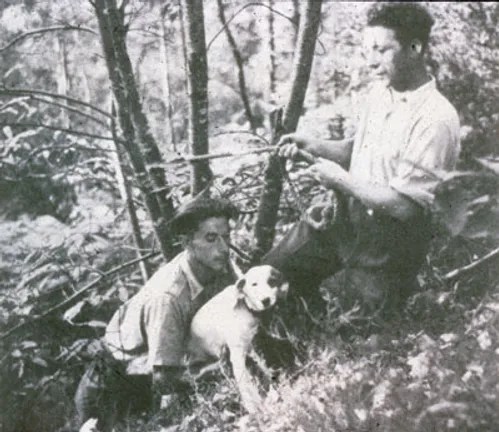
Can dogs make discoveries of their own? Robot, a white mutt from the south of France, is credited with uncovering one of the most important archaeological sites in the world. On September 12, 1940, Robot and his owner, Marcel Ravidat, were out for a walk when Robot suddenly disappeared. Some say he sniffed his way into a hole; others claim he fell in. Either way, when Marcel followed, they stumbled upon the Lascaux cave paintings—one of the earliest known examples of human-made art. Initially kept secret, the caves were finally studied by archaeologists after World War II, revealing the site’s historical magnitude.
Jenny and Sam
As some of humanity’s oldest companions, dogs seem to have a special knack for helping us study the past. Famed paleoanthropologists Mary and Louis Leakey credited their pet Dalmatians, Jenny and Sam, with keeping them safe during fieldwork. While the dogs weren’t allowed to dig—probably because they lacked paleontology degrees—they did play a critical role by alerting the team to predators and scavengers.
Tiger and Nicholas Copernicus
Sure, dogs get credit for fetching, sniffing, and guarding, but cats? They have their own brand of genius—mainly in getting humans to do their bidding. Meet Tiger and Nicholas Copernicus, the feline companions of Albert Einstein and Edwin Hubble. Einstein famously wrote, “There are two means of refuge from the misery of life: music and cats.” Hubble was just as smitten, calling his home “Nicholas’ estate.” His wife, Grace, wrote how Nicholas would sprawl across Hubble’s desk, and when asked why, Hubble would explain, “He is helping me.” Every cat owner knows that kind of “help,” right?
Working Dogs for Conservation
Fast forward to today, and we have The Working Dogs for Conservation (WD4C), a group of canines helping save ecosystems across three continents. These eco-superheroes sniff out endangered species, help scientists map populations, and even play key roles in eradicating invasive species. WD4C has trained dogs to detect everything from Chinese bush clover in Iowa to brown tree snakes in Guam. And their elite squad helps track poachers and intercept illicit wildlife products. Check out these great dogs and great group here.
Whether they’re uncovering ancient art, assisting in groundbreaking research, or protecting our ecosystems, these four-legged heroes remind us that curiosity and collaboration, whether human or animal, can indeed lead to some truly remarkable things.
 The Official Blog of Edvotek®