

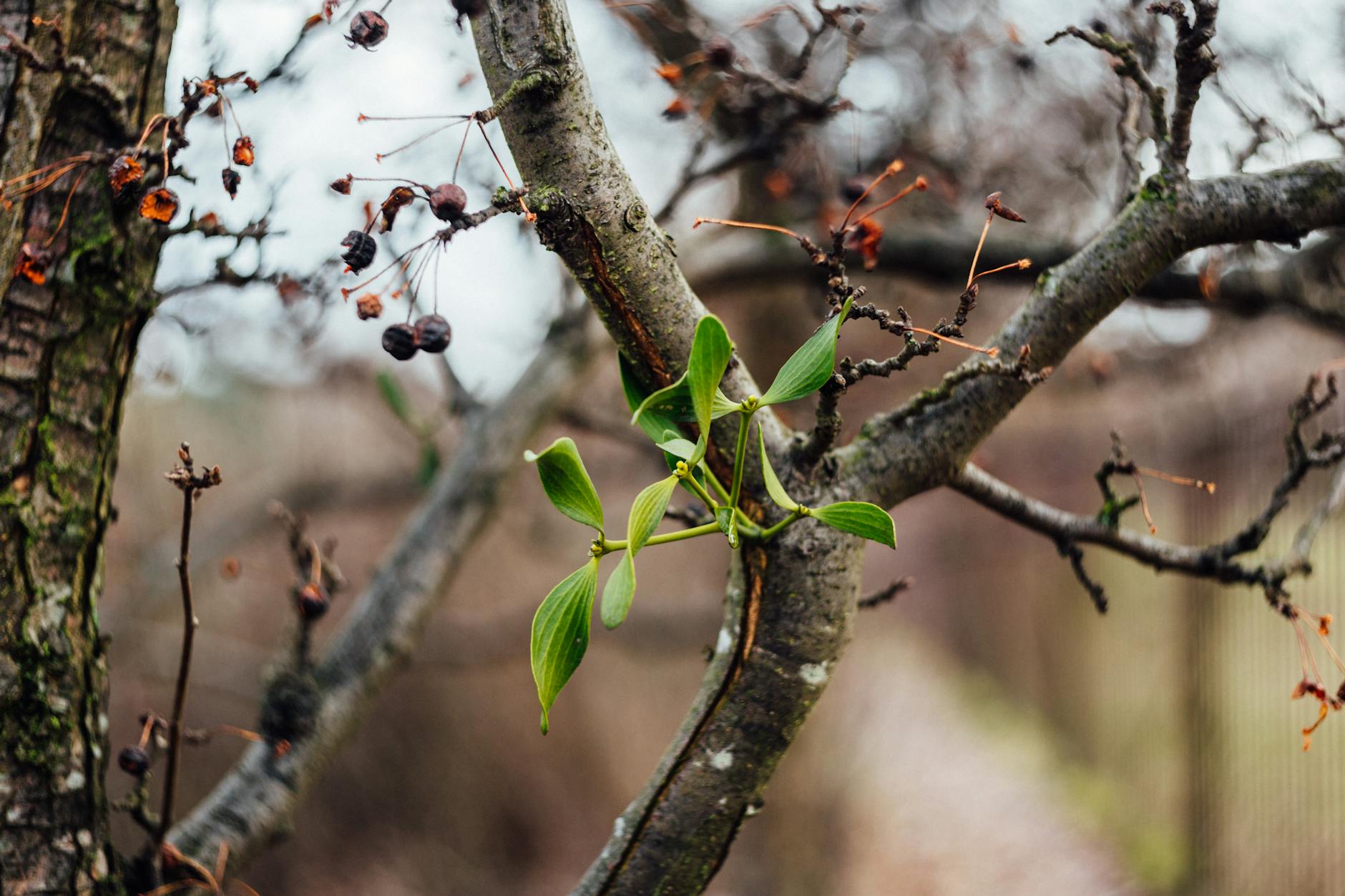
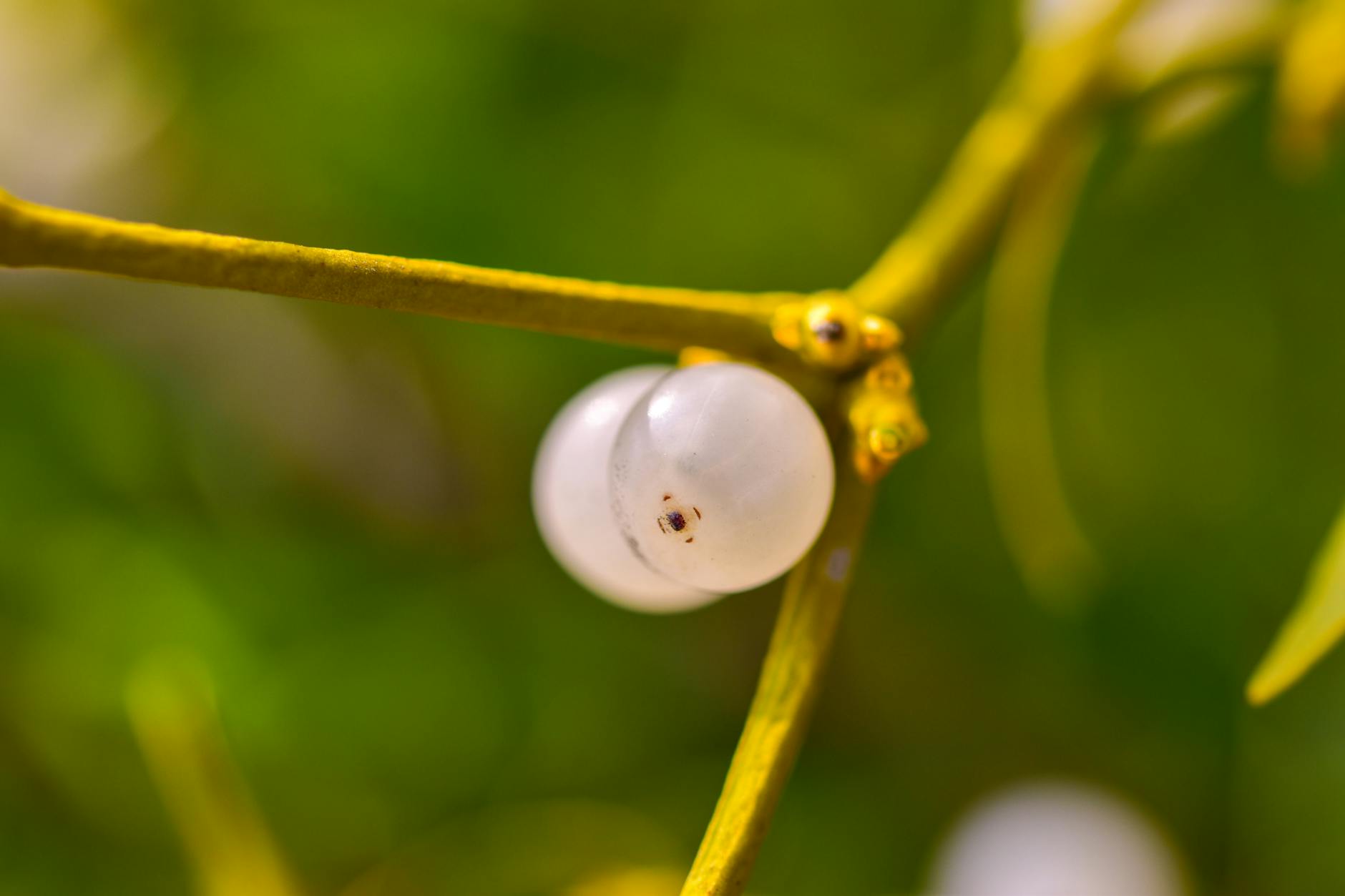
Mistletoe, a plant that has become synonymous with holiday cheer, is also a fascinating organism from a scientific and biological perspective. Scientifically, mistletoe refers to a group of parasitic plants that grow on the branches or trunks of trees. Unlike many other plants, mistletoe does not derive all of its nutrients from the soil; instead, it taps into the vascular system of its host tree through specialized structures called haustoria. These structures allow mistletoe to extract water, minerals, and sugars from the host plant, which can sometimes weaken or even kill the host over time. There are two main types of mistletoe: “dwarf mistletoe” found in North America and “European mistletoe,” which is more commonly associated with holiday traditions. The plant typically has small, oval-shaped leaves and produces white berries that are a key part of its reproductive cycle.
Mistletoe is considered an “hemiparasite,” meaning that while it is capable of photosynthesis and can make some of its own food, it still relies heavily on its host for nutrients. The berries of mistletoe play a crucial role in the plant’s life cycle. They are sticky and, when eaten by birds, can adhere to the bird’s beak or feathers. As birds move from tree to tree, they inadvertently spread the seeds, helping mistletoe propagate and expand its range. This mode of seed dispersal is particularly effective in forested environments where mistletoe can easily spread across large areas.
The biology of mistletoe has a profound impact on the trees it parasitizes. While some mistletoe species are relatively harmless, others, particularly the dwarf mistletoe, can cause significant damage to host trees, leading to a condition known as “mistletoe brooms.” These brooms are abnormal growths of branches and can severely weaken the tree, making it more susceptible to disease, insects, and other stresses. In some cases, mistletoe infestations can lead to the death of the host tree. However, mistletoe does not always kill its host. In some ecosystems, mistletoe can be part of a balanced biological interaction, and many birds and insects rely on it for food and shelter.
Beyond its biological characteristics, mistletoe is deeply woven into cultural traditions, particularly around Christmas. The tradition of kissing under the mistletoe has roots in ancient customs, though the exact origins are debated. Some theories trace the practice back to Norse mythology, where the white berries of the mistletoe became associated with fertility, love and peace. In the Victorian era, the tradition became more formalized, and mistletoe was often hung in doorways during Christmas celebrations. The idea was that if two people stood under the mistletoe, they were obliged to kiss, a gesture symbolizing goodwill and affection. Over time, this practice became a hallmark of Christmas festivities, contributing to the plant’s enduring association with holiday cheer.
Mistletoe is not only a symbol of the holiday season but also an intriguing organism with a unique biological niche. Its parasitic nature, ecological importance, and the ways it reproduces provide valuable insight into the complexity of plant life. While its role in Christmas traditions adds a layer of magic to the season, mistletoe’s true nature as a plant that both supports and challenges the life of its host tree reminds us of the intricate relationships that exist in nature. Whether hanging in doorways during the holidays or growing silently on tree branches, mistletoe is a reminder of both the wonder and the complexity of the natural world. If you are interested in learning more about plant biology and environmental science, check out these kits below: