

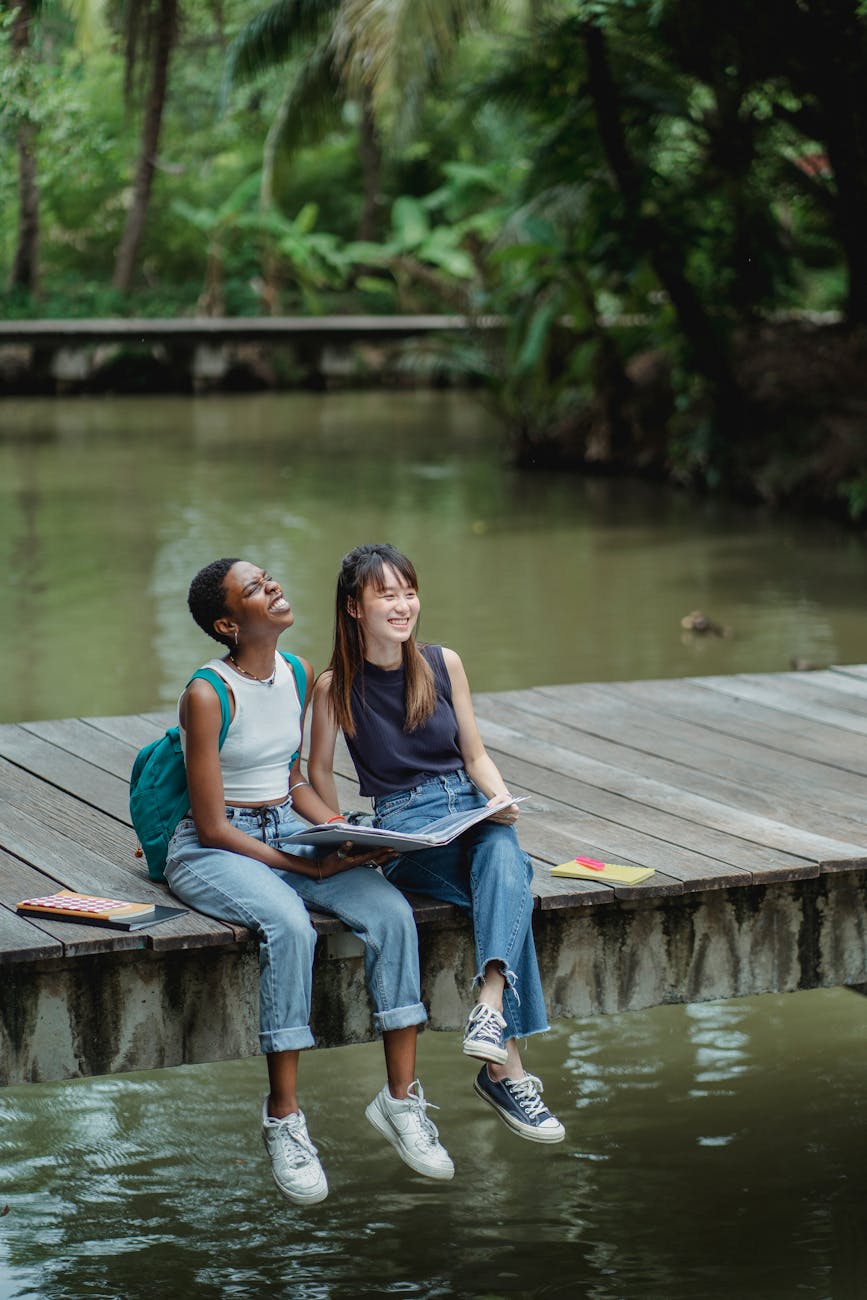
As you know if you’re a regular reader of this blog, April is Citizen Science Month. We think that hands-on projects that get students out of the classroom and into their communities are a key part of learning. We have started an exciting community science program focused on water quality, and we’re inviting students, educators, and families to get involved. The idea is simple but powerful: non-scientists—like your students—can make real contributions to scientific research by collecting and sharing environmental data.
The heart of our citizen science initiative is a student-led investigation into local water quality. We think of water as just an oxygen molecule covalently bonded to two waters – or H2O. In actuality, the water in our ecosystem is a combination of water molecules, dissolved minerals, microbes, and chemicals. This project focuses on the identification of microbes in local bodies of water. This is done through the identification of indicator species, which signify the presence of bacterial contamination. Using established lab protocols, students collect water samples from a variety of sources—tap water, storm drains, lakes, rivers, or ponds. Back in the lab, they measure levels bacteria to assess overall water health.
We have decided to use iNaturalist for our project. This platform designed to connect community science projects with a global network of researchers and contributors. iNaturalist data sharing easy, provide mobile apps for field collection, and offer a sustainable infrastructure so students’ contributions can continue to make an impact long after their experiments are done.
We currently have two experiments that can be used for this project:

- Water Quality Testing III: Multiplex PCR Testing of Water Contaminants. Drinking water is routinely tested for contamination. If a screening tests positive, more sophisticated tests are required. One such test uses PCR in multiplex format. In this experiment, students will test for the presence of three separate, classroom-safe organisms in a water sample using a single PCR reaction.
- Chromogenic Analysis of Water Contaminants: Testing drinking water for every possible type of pathogenic bacteria is slow and costly. Thus, drinking water is tested for coliforms – including the familiar E. coli. Presence of coliforms is an indicator of fecal contamination. In this experiment, students will test control and environmental water samples for the presence of total coliform bacteria and E. coli using color changing enzyme assays.
Citizen Science Month is all about recognizing the power of everyday people to make a difference in science. This project brings that mission to life, inviting students to become researchers, problem-solvers, and stewards of their local environments.
Want to get involved or bring this project to your school? Stay tuned for upcoming resources, experiment kits, and digital tools to get your students started.

This project was made possible by a Science Education Partnership Award (SEPA), Grant Number 2R44GM143977-02, from the National Institute of General Medical Sciences (NIGMS) of the National Institutes of Health (NIH).
 The Official Blog of Edvotek®