
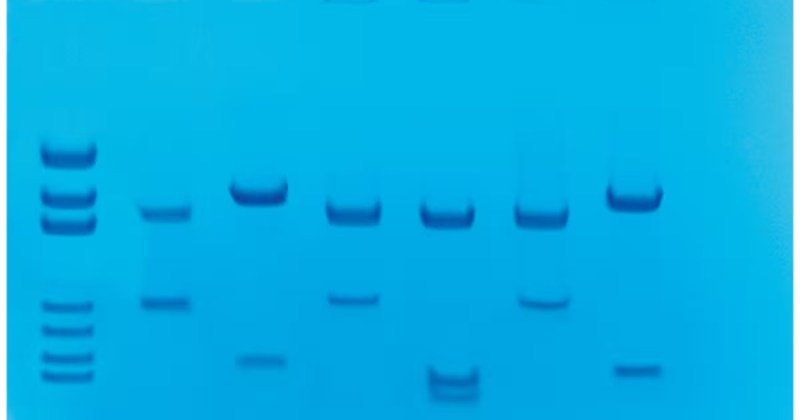

Agarose gel electrophoresis is a staple in any biotechnology classroom. It’s a powerful tool to visualize DNA fragments, but there’s one small detail that makes a big difference—the percentage of agarose in your gel.
So how do you know what percentage to use? Whether you’re analyzing a PCR reaction or checking plasmid prep results, choosing the right gel percentage ensures you get clear, readable bands that make your experiment a success.
Let’s break it down!
What Does Gel Percentage Mean?
The percentage of agarose in your gel determines the pore size in the gel matrix. Think of the gel as a molecular “sieve.” Lower percentages create larger pores, while higher percentages create smaller pores.
Here’s a quick reference:
| Agarose % | Best for… | DNA Fragment Size | Edvotek Kit Example |
| 0.80% | Large fragments | 5,000 – 10,000+ bp | 118, 123 |
| 1.00% | Medium fragments | 800 – 5,000 bp | 371, 1125 |
| 1.5%-2%+ | Small fragments | 100 – 1,000 bp | 345, 962 |
Why It Matters
If your gel’s pore size is too big, small fragments will run too fast and smear. If the pores are too small, large fragments may barely move. Choosing the right percentage helps you:
- Resolve bands clearly
- Avoid smearing or distorted migration
- Interpret your results with confidence
How to Decide
Ask yourself:
- What size of DNA am I expecting?
- Am I separating fragments that are very close in size?
- Do I need to resolve small PCR products or larger plasmids?
Bonus Tip: Precast Gels = Less Guesswork
At Edvotek, we take the prep work off your plate so you can focus on the fun part—exploring science! Whether you’re performing DNA fingerprinting, analyzing PCR products, or running restriction digests, we’ve got the right tools to get your gels running smoothly.
Choose from our easy-to-use Melt and Pour UltraSpec™ Agarose, GoGel Agarose Gel Pack convenient, agarose tablets, or versatile UltraSpec Agarose powder—each designed to deliver consistent, reliable results in the classroom or lab. Just pick the format that fits your experiment, pour, and go!
Final Thoughts
Like choosing the right tool for the job, selecting the right gel percentage is key to successful DNA electrophoresis. It’s a small step that makes a big difference—and with a little practice, your students will be DNA analysis pros in no time.
🔬 Want to learn more? Browse our electrophoresis kits and resources at www.edvotek.com
 The Official Blog of Edvotek®