


If you’re performing electrophoresis, you’ve probably seen the step that says “add loading dye,” but there might not be a lot of explanation in your protocol. So, in this blog post, we’ll talk about loading dye, what it’s made of, and why we use it.
Wait — is it loading dye or loading buffer?
This can be confusing! Depending on the recipe or the product you buy, you might see it called different things. The general composition of these is going to be the same though. In general, a DNA loading dye is a concentrate that contains buffer to keep the sample at a biologically correct pH, a colored tracking dye, and glycerol (or a different chemical) that makes the samples more dense than water.
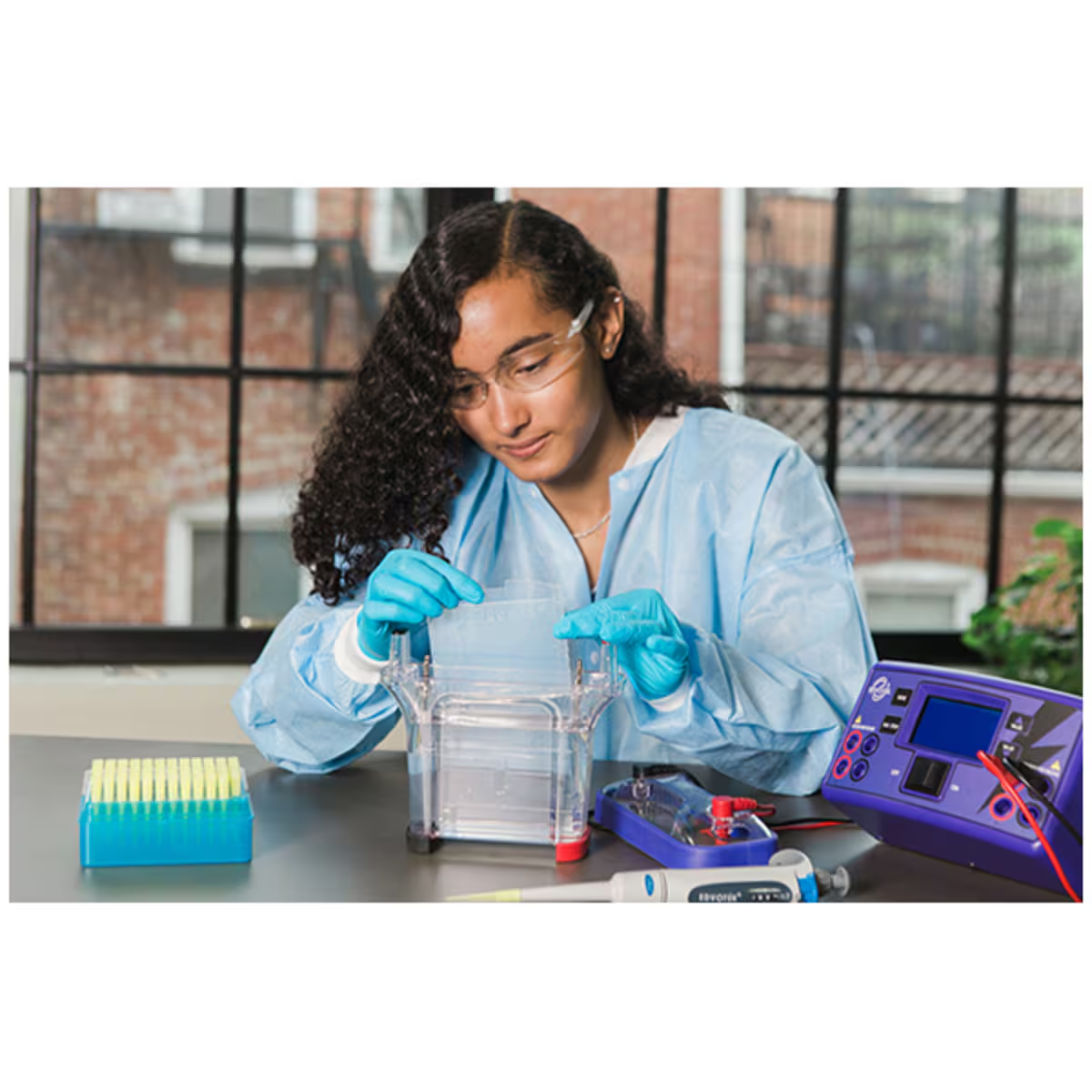
The loading dye for SDS-PAGE usually adds a detergent (sodium dodecyl sulfate) to break down the 3D structure of the proteins, and DTT or another reducing agent to break disulfide bonds. (Want to know why this is important? Check out our previous post.)
Why do we use loading buffer for electrophoresis experiments?
In both agarose gel electrophoresis and SDS-PAGE, samples are prepared using an aqueous (water-based) loading dye. These samples are loaded into wells of a gel that is submerged in an aqueous solution. When using a loading dye, the samples sink into the well. This is because the loading dye makes the samples more dense than water. Without the added density of the loading dye, our sample would immediately mix with the buffer in the gel chamber, and we may end up losing enough sample that we would not get results.
Why do loading dyes have a color?
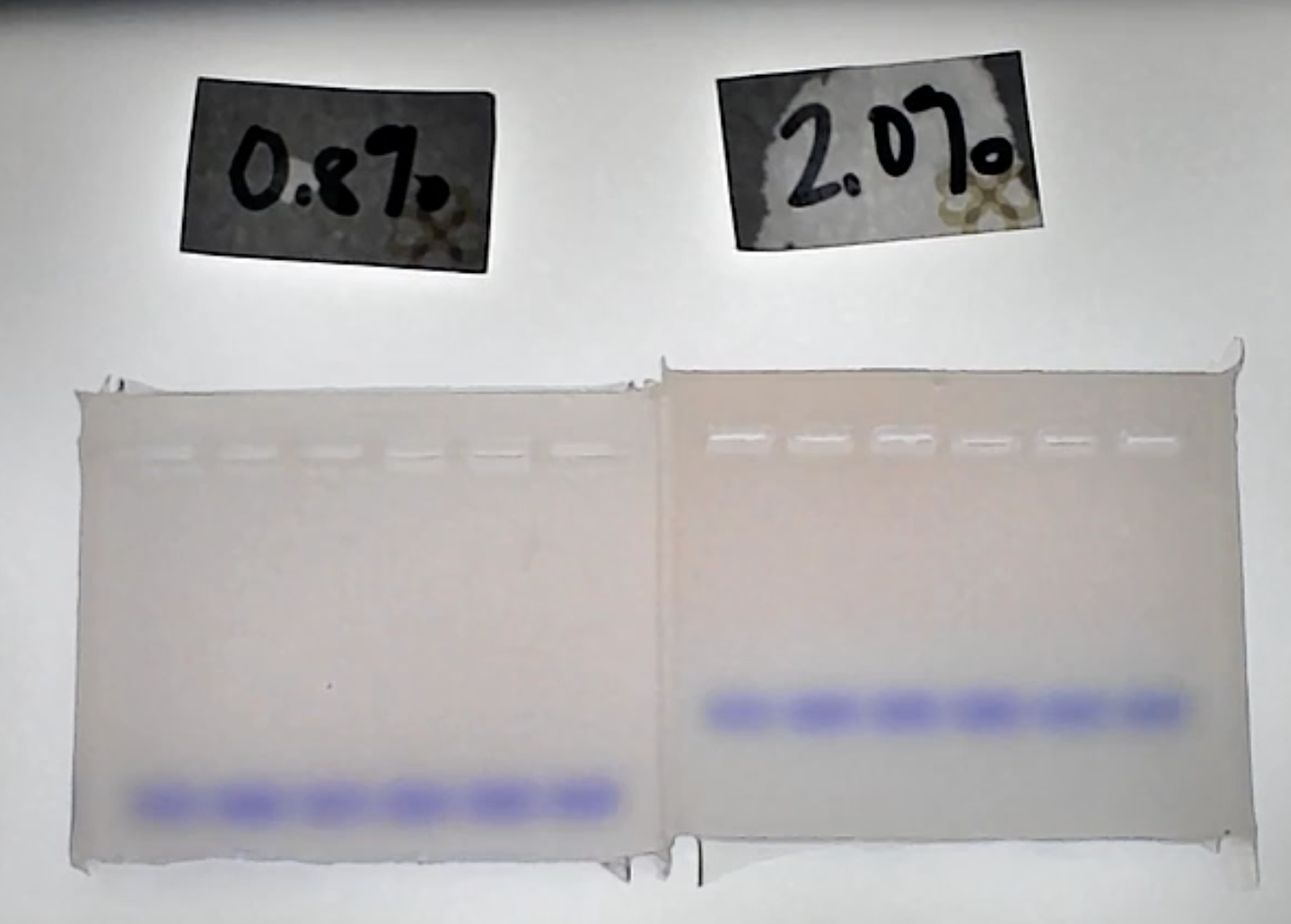
DNA and the vast majority of proteins are clear and colorless (there are exceptions, like GFP!). Because of this, most loading buffers have a special dye added, known as a tracking dye. This dye will generally run with the smallest DNA or protein fragments, letting us know when the sample has fully run off the gel. It ensures we don’t lose any data from those smallest pieces of biomaterial!
In some Edvotek experiments, there’s no loading dye. Why?
Edvotek’s Lypho-Proteins Lypho-templates, Lypho-primers, and PCR EdvoBeads are pre-formulated with chemicals that make the samples more dense than water, and built in tracking dyes. This saves you the time of adding the loading dye, plus you don’t have to keep track of another component!
What happens if I don’t use the loading dye?
You may get lucky and still get results! However, there are a couple of common problems that can occur:
- The samples are not at the correct pH, so they may degrade or have the wrong chemical charge. This will affect how they migrate through the gel. If the DNA or protein is degraded, they won’t run at the right size. If they have the wrong chemical charge, they could run to fast or too slow, also changing the apparent size.
- The entire sample won’t make it into the well. This might give us the wrong idea about how much of our target is present in a sample, or the results might not be able to be visualized.
- Without a tracking dye, you won’t be able to tell how far the samples have run, and you might lose some of the data.
In short — loading dye ensures your sample actually gets into the gel, and it gives you a way to monitor its progress in real time.
 The Official Blog of Edvotek®