
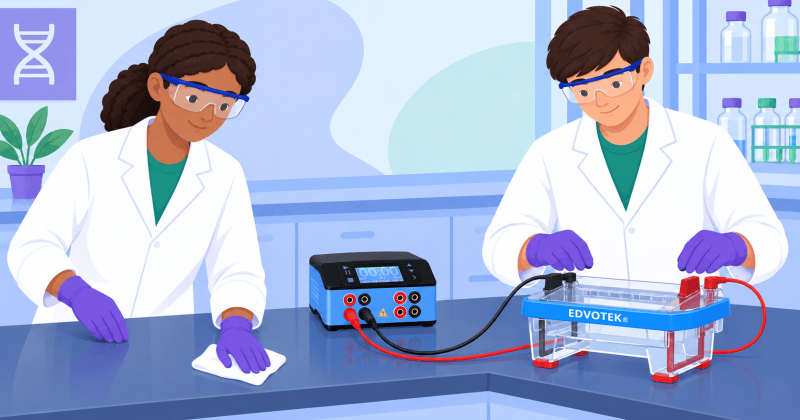

In the biotechnology lab, students take classroom concepts and bring them to life.
But with real science comes real responsibility!
Whether you are working with chemicals, heat, or microbes, smart safety practices are essential.
This video discusses ways to keep your lab safe, clean, and experiment-ready all year long.
For additional resources, check out these past blog posts!
For printable guides:
- Lab Safety Series – Safely Handling Chemicals, Heat, and Microbes
- Lab Safety Series – Performing Demonstrations Safely\
- Lab Safety Series – Understanding Safety Data Sheets (SDS) and Chemical Labels
Transcript:
Edvotek Instructional Video: Laboratory Safety
In the biotechnology laboratory, students take classroom concepts and bring them to life. Working with chemicals, heat, and biological materials can be dangerous if they are not handled properly.
In this video, we’ll review smart safety practices that are essential to keeping your lab safe, clean, and experiment ready.
Good lab safety starts before the experiment begins. Take a moment to prepare your workspace and review the safety procedures.
Always wear the appropriate personal protective equipment, including safety glasses and gloves when required. Tie back long hair and secure loose clothing.
Keep your work area clean and organized. Never eat or drink in the laboratory.
Before using a chemical, read the label and understand the hazards. When needed, consult the Safety Data Sheet, or SDS, for information about safe handling, storage, and emergency protocols.
Never use a chemical in an unlabeled container, and never mix chemicals unless the procedure specifically tells you to.
Use the correct tools and techniques when transferring chemicals. Avoid contact with your skin and eyes, and never pipette chemicals by mouth.
If a spill occurs, stop and notify your instructor. Follow your laboratory’s spill response procedures rather than trying to clean up a hazardous chemical by yourself.
Some laboratory procedures involve heating solutions. Hot liquids and containers can cause serious burns, even when they don’t look hot.
Use appropriate heat-resistant protection when needed, handle heated materials carefully, and follow the procedure for cooling materials before handling or transferring them.
When using electrical equipment like power supplies and electrophoresis chambers, make sure your hands and the work area are dry. Check that connections are secure, and always turn off and disconnect the power before opening or handling electrophoresis equipment.
The safest laboratory is a prepared laboratory. Wear the appropriate protective equipment, know the materials you’re working with, follow the procedure, and ask questions whenever you’re unsure.
Safety is everyone’s responsibility. By staying prepared, staying aware, and following good lab safety practices, you can help create a safe and successful laboratory environment.
Now that you know the basics, you’re ready to begin.

