


When it comes to groundbreaking scientific discoveries, we often think in terms of complex organisms. Species like humans or mice are key players in biomedical research and molecular biology. However, in the world of biology, a tiny, transparent roundworm called Caenorhabditis elegans (C. elegans) has had an abnormally large influence, leading to multiple Nobel Prizes and transforming our understanding of genetics, neuroscience, and aging. So, what makes this humble organism so special? And how has its study contributed to some of the most prestigious scientific honors?
What is C. elegans?
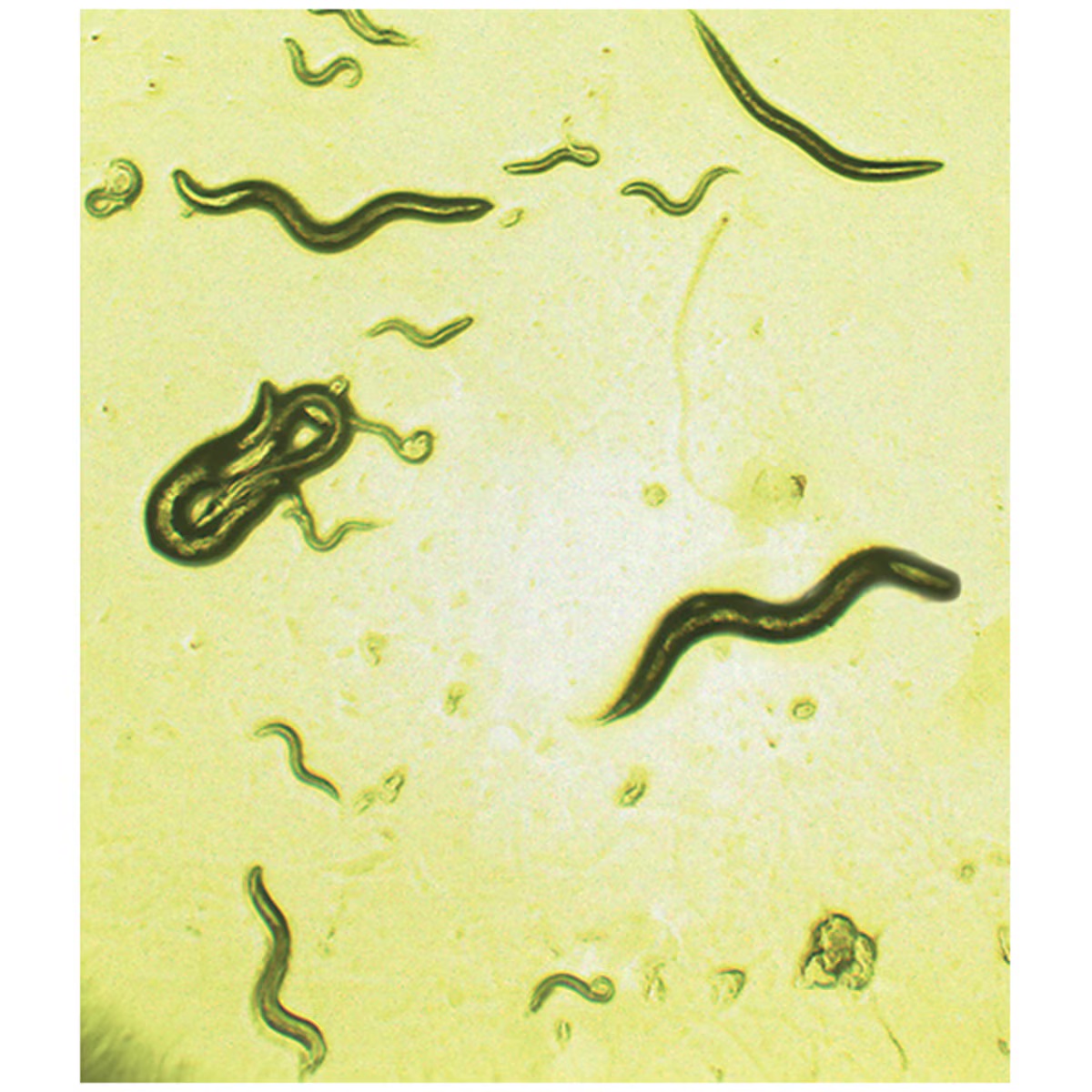
C. elegans is a small, soil-dwelling nematode that measures about 1 millimeter in length. It may seem an unlikely candidate for research, but its simplicity and transparency make it a powerful model organism. The worm has only 959 cells in its adult form, and every cell can be traced from embryo to adult. Its entire genome, consisting of approximately 20,000 genes, has been sequenced, and because it’s transparent, scientists can easily observe cellular processes in real time. Importantly, C. elegans are also easy to raise and have a quick development time.
The worm is also remarkably similar to humans at the molecular level. About 40% of its genes have human counterparts, which means discoveries made in C. elegans often have direct implications for understanding human biology. All of this together has made C. elegans a perfect model organism.

1. The First Nobel Prize: Genetic Regulation of Organ Development (2002)
The first Nobel Prize awarded for research on C. elegans came in 2002, in the field of physiology or medicine. It was shared by Sydney Brenner, H. Robert Horvitz, and John Sulston for their work on genetic regulation of organ development and programmed cell death.
- Sydney Brenner initiated the use of C. elegans as a model organism in the 1960s. He recognized that its simple anatomy, short life cycle, and ability to reproduce rapidly would make it ideal for studying fundamental biological processes.
- John Sulston mapped the entire cell lineage of C. elegans, which means he documented the division and differentiation of every single cell from the fertilized egg to the adult worm. This unprecedented achievement laid the foundation for understanding how complex organisms develop from a single cell.
- H. Robert Horvitz discovered the genes involved in programmed cell death (apoptosis), a process crucial for development and maintaining tissue health. Apoptosis is vital in preventing cancer, autoimmune diseases, and neurodegenerative conditions, making this discovery immensely significant for human health.
Their work explained not only how cells are created but also how they die, a balance that is essential for healthy development.
2. RNA Interference: Nobel Prize in 2006
The second Nobel Prize involving C. elegans was awarded in 2006 to Andrew Fire and Craig Mello for their discovery of RNA interference (RNAi). RNAi is a biological process in which RNA molecules inhibit gene expression by neutralizing targeted mRNA molecules. This groundbreaking discovery was first observed in C. elegans and has since become one of the most powerful tools in molecular biology for gene silencing.
RNAi allows scientists to “turn off” specific genes, making it easier to study their functions. This technique has revolutionized research in genetics, molecular biology, and medicine, with potential applications ranging from cancer treatment to antiviral therapies.
3. Discoveries in Aging: Nobel Prize in 2008
In 2008, another Nobel Prize in Chemistry was awarded to Martin Chalfie, who, while working with C. elegans, helped develop the green fluorescent protein (GFP) as a biological marker. GFP was first found in jellyfish, but Chalfie used it in C. elegans to illuminate cells and proteins. By tagging proteins with GFP, researchers can observe where and when certain genes are expressed in living organisms, which has become a critical tool for modern biology. Although this prize was not exclusively for work with C. elegans, the worm was an instrumental model in advancing the technology, particularly in tracking gene expression in living tissues.
4. MicroRNA regulation of gene expression: Nobel Prize in 2024
Finally, just this year a final Nobel Prize in Physiology or Medicine was awarded for the discovery of microRNAs, a class of tiny RNA molecules that play a role in gene regulation. Once again, C. elegans played a key role. The researchers, Victor Ambros and Gary Ruvkun, were examining specific developmental mutations in the worms. The pair combined research projects to uncover the mechanism that microRNAs use to control gene expression. Over the subsequent years, researchers have found thousands of microRNAs that control processes related to development, cell function, and disease.
Looking to the Future
As researchers continue to explore new frontiers, C. elegans remains a key tool in unraveling biological mysteries. Whether it’s finding new treatments for diseases like Alzheimer’s or unlocking the genetic secrets of longevity, the humble roundworm continues to help scientists push the boundaries of knowledge. Given its track record, it’s not far-fetched to imagine that C. elegans research may lead to more Nobel Prizes in the future.
In short, C. elegans may be small, but its contributions to science have been monumental, earning it a place at the forefront of biological research and in the annals of Nobel history. In the words of Sydney Brenner, “Without doubt, the fourth winner of the Nobel Prize this year is Caenorhabditis elegans. It deserves all of the honor, but of course it will not be able to share the monetary award.”
Next steps
Edvotek has multiple custom experiments available to explore C. elegans in the classroom! Check out the selection here. In addition, we have multiple blog posts detailing why the worms are so popular, how to care for the worms in your classroom, how they respond to drugs, and the ever-popular worm-o-ween!
 The Official Blog of Edvotek®